

Introduction
A bathroom vanity with sink is the easiest way to upgrade a bathroom in one move, because the cabinet, countertop, and basin arrive as a matched set instead of three separate purchases that may or may not fit together. That convenience is also where buyers get tripped up. Does the price include the faucet? Are the holes pre-drilled for the faucet you want? Will the sink actually leave room for a drawer? This guide walks through every decision in the order you'll face it: the type of vanity, the size, the sink style, the materials, the finish, and the details that decide whether installation goes smoothly, so you end up with a vanity that fits your bathroom and still looks good in ten years.
Key Points
- A vanity with sink is usually a package. The cabinet and countertop (often with the basin built in or included) come together, but the faucet and drain are commonly sold separately.
- Width is the first decision. Most bathrooms fit a 24 to 36 inch single vanity, while a true double sink needs about 60 inches or more.
- Standard height is now 34 to 36 inches. This "comfort height" is easier on your back than the older 30 to 32 inch standard.
- Your sink choice limits your countertop choice. An undermount sink needs a solid, waterproof top like quartz or granite, while a drop-in works with almost anything.
- Plywood boxes and quartz tops last longest. They stand up to moisture better than particleboard or laminate.
- Check faucet holes before you order. Single-hole, 4 inch, and 8 inch spreads are not interchangeable.
- Floating vanities need strong wall support. They must be anchored to studs or blocking, not just drywall.
What Is a Bathroom Vanity With Sink?
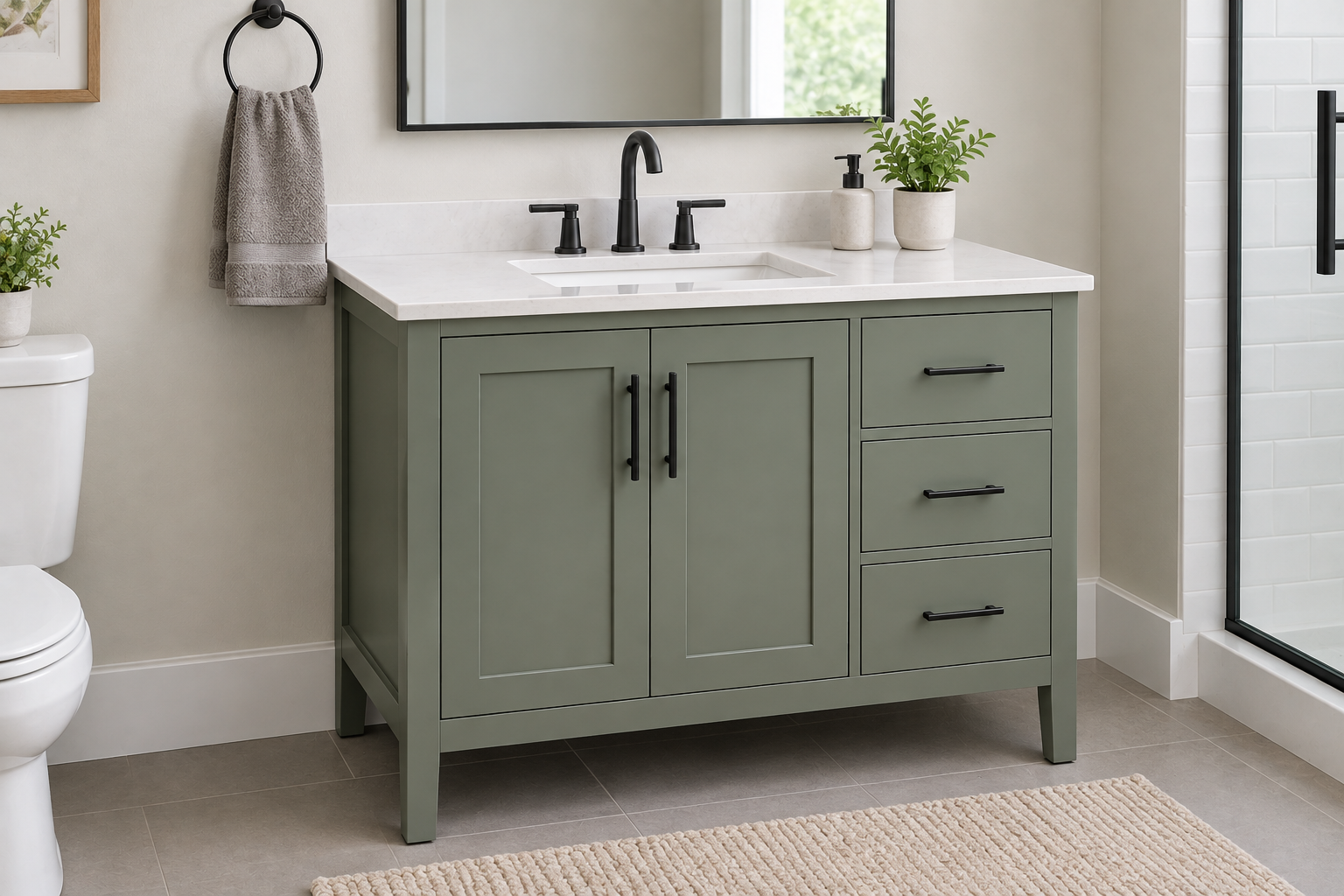
A bathroom vanity with sink is a storage cabinet that comes with a countertop and a basin already included, so the main parts of your sink area arrive as one coordinated unit. You'll also see it sold as a sink vanity combo, a vanity set, or a washbasin cabinet. The cabinet hides your plumbing and holds towels and toiletries, the countertop gives you a surface to work on, and the sink handles the water.
What's included varies more than most shoppers expect. Some listings sell only the cabinet, and you buy the top and sink separately. A true combo includes the cabinet, the top, and the sink, and many also include a backsplash and hardware. A full "set" may add a mirror, a faucet, or a drain. Before you buy, check exactly what's in the box, because a cheaper price often just means the faucet, drain, or top isn't included.
Types of Bathroom Vanities With Sinks
The main types are freestanding, floating, corner, and pedestal or console styles, and the right one depends on how much storage you need and how much floor space you want to show.
Freestanding Vanities
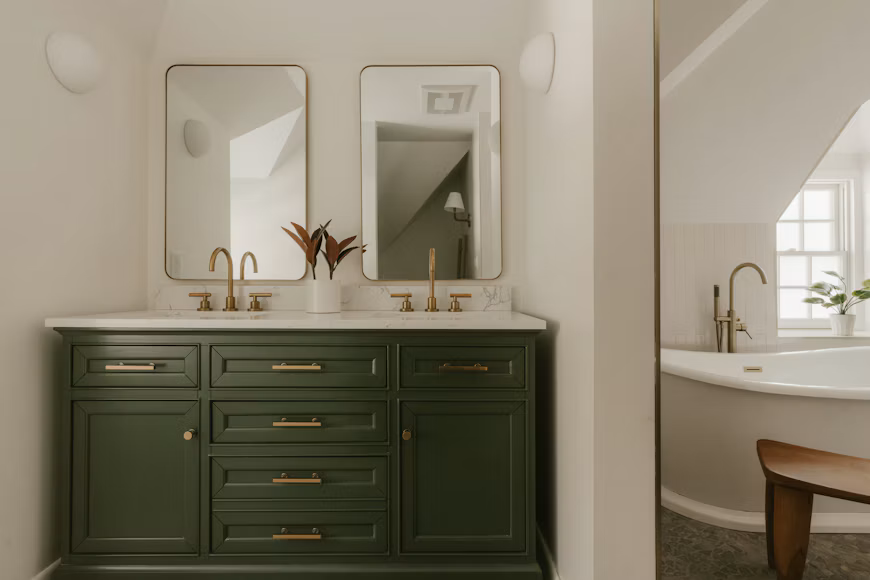
A freestanding vanity sits directly on the floor, either on a solid base or on legs. It's the most common type because it offers the most storage for the money and is the easiest to install, since the floor carries the weight. Furniture-style versions with visible legs and a lower shelf feel lighter than a boxy cabinet and are a popular way to make a bathroom look more designed.
Floating (Wall-Mounted) Vanities
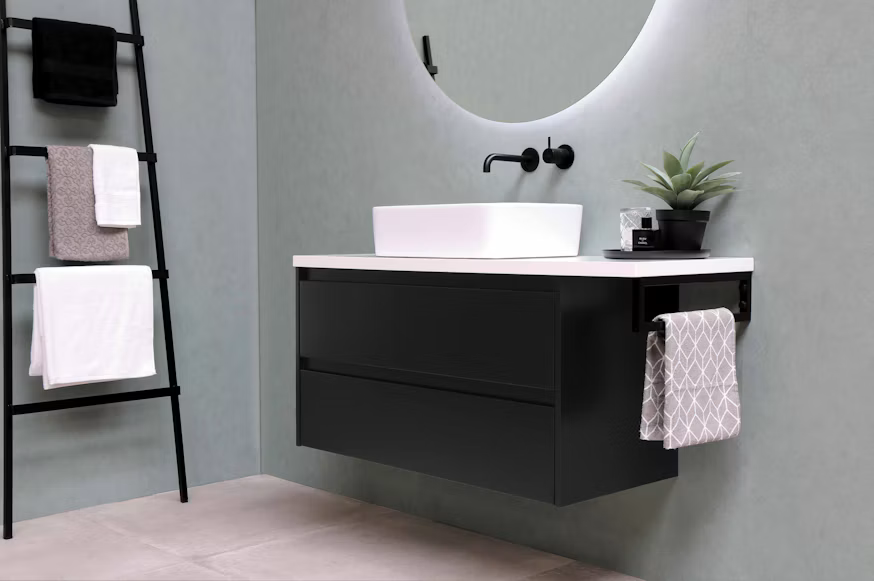
A floating vanity is mounted to the wall with nothing underneath, which makes a small bathroom feel more open and makes the floor much easier to clean. The catch is support. The vanity, top, sink, and everything stored inside it hang from the wall, so it has to be fastened into studs or solid blocking, and it's worth confirming the cabinet's weight rating before you buy. If your wall is thin or you aren't comfortable opening it up, a freestanding style is the safer choice.
Corner and Compact Vanities
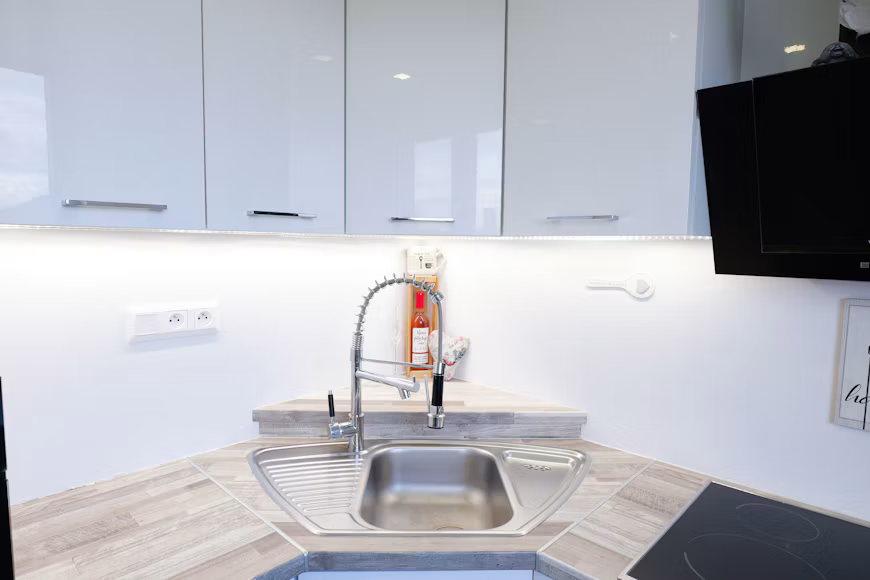
A corner vanity fits a triangular or angled cabinet into a 90 degree corner, which can rescue a layout where a standard rectangular vanity would block the door or shower. Compact and narrow vanities, often 18 to 24 inches wide, work the same way in powder rooms and tight half baths. You give up some storage in exchange for a footprint that actually fits.
Pedestal and Console Sinks
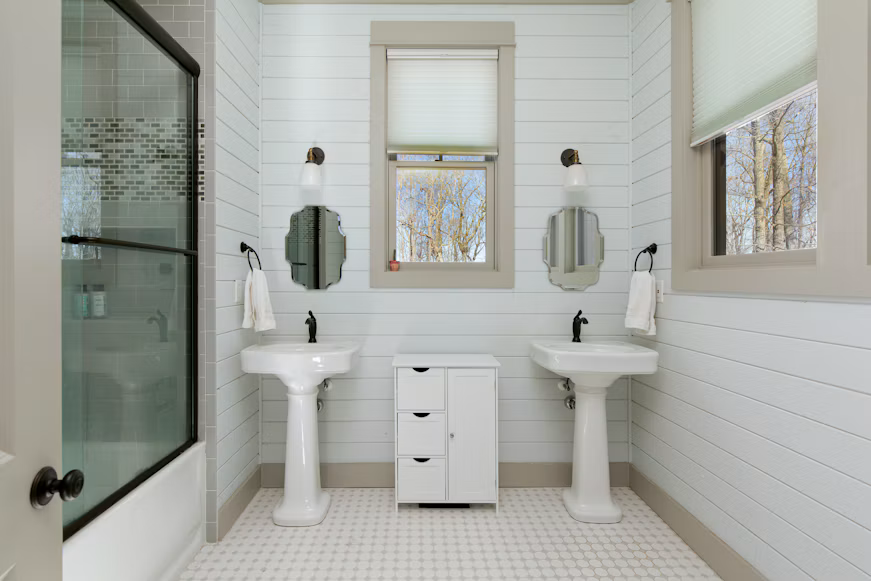
A pedestal sink is a basin on a slim column, and a console sink sits on an open frame with legs. Neither has a cabinet, so they offer little or no storage, but they're a stylish choice for a powder room where you need a sink and nothing else.
Single Sink or Double Sink Vanity?
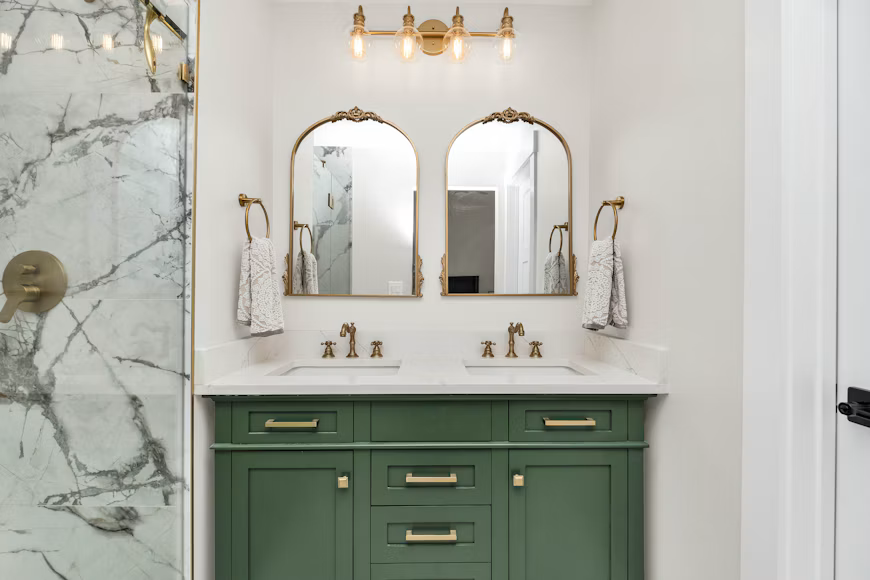
A single sink vanity makes sense for most bathrooms, and a double sink only makes sense when two people regularly need the sink at the same time and you have at least 60 inches of wall width to work with. A single sink vanity gives you more usable countertop and storage in the same footprint, and it costs less to buy and plumb. A double sink vanity adds a second basin and faucet, which eases the morning rush, but if the wall is too narrow, the two basins end up crammed together with barely any counter space between them.
Plumbing codes commonly call for roughly 30 inches between the centers of two adjacent sinks, so a double vanity under 60 inches rarely works well in practice. If you're leaning toward two sinks, our breakdown of double sink bathroom vanity ideas covers sizing, spacing, and styles in more detail. If you're short on width, a larger single vanity is nearly always the better use of the space.
Bathroom Vanity With Sink Sizes: Width, Height, and Depth
Most single vanities range from 24 to 48 inches wide, with 30 and 36 inches the most common sizes, while a standard height is 34 to 36 inches and a standard depth is about 18 to 21 inches. Width is the number that drives everything else, so start there.
| Width | Best For | What to Expect |
|---|---|---|
| 18 to 24 inches | Powder rooms and tight half baths | Minimal counter space, basic storage |
| 30 to 36 inches | Guest and standard family bathrooms | Comfortable counter, good drawer storage |
| 42 to 48 inches | Roomier or primary bathrooms | Generous counter and storage |
| 60 inches | Entry-level double sink | Tight but workable sink spacing |
| 72 inches or more | Full double sink | Comfortable counter around both basins |
For height, comfort height at 34 to 36 inches matches a kitchen counter and is easier on your back, while the older 30 to 32 inch height still suits a children's bathroom or a vanity topped with a tall vessel sink, since the sink adds several inches on top. Depth usually runs 18 to 21 inches, with slimmer 16 to 18 inch models for narrow rooms. If a standard depth makes the room feel cramped, a narrow-depth vanity can free up the walkway.
Remember to measure the space around the vanity, not just the vanity itself. Codes commonly require at least 21 inches of clear floor space in front of the sink and about 15 inches from the sink's centerline to a side wall, so check your local requirements before you order. Also account for the door swing, any drawers that need room to open, and the location of your existing drain and water supply lines.
Sink Types: Undermount, Drop-In, Vessel, and Integrated
The four main sink styles are undermount, drop-in, vessel, and integrated, and each one affects how the vanity looks, how easy it is to clean, and which countertop materials will work.
| Sink Type | How It Mounts | Main Advantage | Watch Out For |
|---|---|---|---|
| Undermount | Attached below the countertop | Seamless, easy to wipe clean | Needs a solid top like quartz or granite |
| Drop-in | Rests in a cutout with a rim on top | Budget friendly and easy to install | Rim can collect grime |
| Vessel | Sits entirely above the counter | Dramatic, decorative look | Needs a taller faucet, harder to clean around |
| Integrated | Top and sink molded as one piece | No seams, fewest leak points | Replacing the top means replacing the sink |
An undermount sink is the favorite for a clean, modern look, because you can sweep water and crumbs straight off the counter and into the basin. It needs a waterproof top such as quartz, granite, or solid surface, and it isn't a good match for laminate, where the cut edge is exposed to moisture. A drop-in sink works with nearly any top, including laminate, and is the simplest to install, though the visible rim catches soap scum over time.
A vessel sink is a bowl that sits on top of the counter like a piece of décor. It makes a statement, but it requires a vessel faucet or wall-mounted faucet, and the extra height means you often want a lower vanity to keep the rim at a comfortable level. An integrated sink is molded together with the countertop in one piece, usually in cultured marble, porcelain, ceramic, or solid surface. With no seam to trap water or grime, it's the easiest to keep clean and a popular choice for budget-friendly and low-maintenance vanities.
Sink and Countertop Materials
Porcelain and vitreous china are the most common sink materials, and quartz is the most practical countertop, because both resist stains and moisture without much upkeep. Here is how the main options compare.
For the sink basin, vitreous china and porcelain are hard, glossy, and easy to clean, which is why they're standard. They can chip if you drop something heavy, but small chips can usually be repaired. Glass vessel sinks look striking but show water spots and scratches quickly. Stone and solid surface sinks feel high end and are very durable, but natural stone is heavy and needs sealing. Stainless steel is uncommon in bathrooms because it shows water spots.
For the countertop, these are the options you'll see most often:
- Quartz is engineered, nonporous, resists staining, and never needs sealing, which makes it the most practical choice for a busy bathroom.
- Marble is beautiful and pairs well with traditional and luxury styles, but it's porous and etches from things like toothpaste and perfume, so it needs regular sealing and more careful care.
- Granite is very durable and heat resistant but usually needs periodic sealing.
- Porcelain tops are dense and low maintenance, and resist scratches and stains.
- Cultured marble is a molded blend of crushed marble and resin with a protective gel coat. It's affordable, comes with an integrated sink, and has no seams, though it can scratch or dull over time.
- Solid surface is seamless and can be sanded to repair minor damage.
- Laminate is the budget choice, but the seams and edges are vulnerable to water, so it's best kept for low-splash guest bathrooms.
Vanity Cabinet Materials
A moisture-resistant cabinet is what keeps a vanity looking good past the first few years, so pay as much attention to what's behind the doors as to the finish on the front. The bathroom is the humid room of the house, and cheap cabinet materials fail there first.
- Solid wood such as oak, maple, walnut, or teak is strong and can be refinished, but it's more expensive and can warp if moisture gets in repeatedly. Teak is naturally resistant to water.
- Plywood is the best choice for the cabinet box because layered construction resists swelling and keeps its shape.
- MDF has a smooth surface that takes paint beautifully, so it's common on painted doors, but it swells permanently if water gets past the finish.
- Particleboard is the cheapest and the weakest, and it crumbles when it stays wet.
- Engineered wood and bamboo can be good moisture-tolerant options when well sealed.
When you shop, ask what the box itself is made of, not just the doors, and check that the bottom and back panels have a sealed or waterproof finish. A cabinet with a plywood box and a good paint or lacquer finish will outlast a cheaper one with a prettier showroom photo.
Bathroom Vanity Styles and Finishes
Choose a vanity style that matches the rest of the bathroom's tile, fixtures, and lighting, then use the finish and hardware to add personality. These are the styles you'll see most often:
- Modern and contemporary vanities use flat-front doors, clean lines, and minimal hardware, often with a floating design. For examples in real rooms, our roundup of modern bathroom ideas shows how these look in a finished space.
- Minimalist and Scandinavian styles strip things back even further, using light woods, handleless doors, and quiet colors.
- Farmhouse and rustic vanities pair shaker-style doors or natural wood with black or aged metal hardware.
- Traditional and transitional vanities use raised-panel or shaker doors and furniture-style details, with transitional versions simplifying the lines for a fresher look.
- Industrial vanities use dark finishes and exposed metal frames or legs.
- Mid-century modern vanities bring in warm walnut tones, tapered legs, and slim hardware.
- Luxury vanities usually mean solid wood, a natural stone top, and finer details like fluted fronts.
For color, white remains the safest and most flexible, black, gray, and navy add depth, and natural wood in walnut or oak adds warmth. Matte finishes hide fingerprints, while glossy finishes reflect light but show water spots. Hardware in matte black, brushed nickel, polished chrome, or brass can change the feel of a vanity completely and is one of the easiest things to swap later.
Storage: Drawers, Doors, and Shelves
A vanity's storage design matters more than its size, because a well-organized 30 inch cabinet can hold more than a poorly laid out 36 inch one. Drawers are generally more useful than doors, since you can see and reach everything at once instead of digging past items stacked in the back. Look for soft-close hinges and drawer slides, full-extension drawers, and a notched or U-shaped drawer that fits around the plumbing so you don't lose the space under the sink.
Open shelves are great for rolled towels and baskets, and adjustable shelves help you fit tall bottles. A towel bar on the side or a built-in shelf below the counter can add storage without taking up more floor space. In a small bathroom, drawer dividers and stackable organizers usually do more to reduce clutter than adding more cabinet volume.
Faucets and Drain Assemblies: Making Sure Everything Fits
Before you order, confirm that the vanity's faucet holes match the faucet you want, since this is one of the most common reasons buyers have to return a faucet or a vanity. Countertops are usually pre-drilled for one of three setups:
- Single-hole: one hole for a single-handle faucet.
- Centerset (4 inch): three holes close together for a faucet with a connected base.
- Widespread (8 inch): three holes for separate handles and spout.
Some tops have no holes and need to be drilled, and vessel sinks need a taller vessel faucet or a wall-mounted faucet. Also check whether the sink has an overflow hole, because your drain assembly has to match: a pop-up drain for a sink with an overflow, and a different style for one without. Finally, confirm that the faucet's supply lines and the P-trap have room inside the cabinet, particularly if the vanity has a drawer.
How to Choose the Right Vanity for Your Bathroom
The best vanity is the one that fits your space, your plumbing, and your habits, so match it to the room before you fall for the style. Start with these decisions:
- Measure the space. Check the wall width, the distance from the wall to the door and tub, and the clearance in front.
- Note your plumbing. If the drain and supply lines sit in the middle of the wall, a standard vanity will line up easily. Off-center plumbing may call for a different cabinet layout or a plumber.
- Decide on storage. Think about what must fit inside, and favor drawers.
- Pick the sink style. Choose based on how much cleaning and maintenance you're willing to do.
- Choose materials for durability. Prioritize a plywood box and a moisture-resistant top.
- Set your budget. Decide how much of it goes to the vanity vs. the faucet, mirror, and installation.
For a small bathroom or powder room, a 24 inch or narrower vanity, or a wall-mounted one, saves space. A guest bathroom can use a simpler, lower-maintenance combo. A primary bathroom benefits from more width, more drawers, and sometimes a second sink. If you need an accessible bathroom, look for a lower counter (generally no higher than 34 inches) and open knee space underneath, which a floating or open-base vanity can provide.
How Much Does a Bathroom Vanity With Sink Cost?
Most vanities with sinks cost from about $200 to $3,000 or more, with price driven mainly by size, materials, and construction. Entry-level combos with a laminate or cultured marble top and an MDF or particleboard cabinet run roughly $200 to $600. Mid-range vanities with a plywood or solid wood box and a quartz or engineered stone top generally fall between about $600 and $1,500. Premium and custom vanities with solid hardwood, natural stone tops, and detailed finishes start around $1,500 and can go well beyond $3,000. Double sink vanities cost more, commonly $600 to $2,200 for a 60 or 72 inch model.
Don't forget the extras. The faucet, drain, mirror, and lighting are often separate, and professional installation for a straightforward swap typically adds a few hundred dollars. It costs more if the plumbing has to be moved or if you're switching to a floating vanity that needs wall reinforcement. If you're comparing prices, look at the total cost to finish the vanity, not just the sticker price on the cabinet.
Bathroom Vanity Installation: What to Expect
A basic freestanding vanity swap is a manageable weekend project for a confident DIYer, while floating vanities and any job that moves the plumbing are best left to a pro. The process generally follows these steps:
- Shut off the water and disconnect the supply lines and drain, then remove the old vanity, cutting through any caulk.
- Check the wall and floor, and mark the studs. Repair any damage or moisture issues before you go further.
- Position and level the new vanity, using shims if the floor isn't flat, and secure it to the wall studs.
- Install the faucet and drain before the top is fully in place, since it's much easier to work without the cabinet in the way.
- Set the top and sink, sealing the sink and the backsplash edge with silicone sealant.
- Connect the plumbing, attaching the supply lines and the P-trap.
- Test for leaks. Run the water, check every joint, and watch for drips over the next day.
A floating vanity adds the step of installing wall blocking or a mounting rail rated for the load. If you notice soft flooring, mold, or water damage when you remove the old vanity, address it first, since a new vanity will only hide the problem.
How to Clean and Maintain Your Vanity
Wipe up standing water, use gentle cleaners, and check under the sink regularly, and a good vanity will stay looking new for years. Wipe the countertop and sink after use, especially around the faucet where water spots form. Use mild soap and a soft cloth, and avoid abrasive pads that can dull glossy or stone surfaces. Skip acidic cleaners like vinegar on marble, since they can etch the surface, and reseal natural stone tops as recommended. Run the bathroom exhaust fan during and after showers to limit moisture, which also helps prevent mold.
Once in a while, open the cabinet and look for drips, damp spots, or stains around the P-trap and supply lines, since small leaks are easy to fix early. Re-caulk the backsplash seam if it cracks or turns dark, and tighten loose hinges or drawer slides when you notice them. Small chips in a ceramic or porcelain sink can often be touched up with a repair kit, and cabinet finishes can be refreshed with matching touch-up paint.
Frequently Asked Questions
What is a bathroom vanity with sink?
It's a bathroom cabinet that comes with a countertop and sink basin included, forming a complete sink area. The faucet and drain are often sold separately, so check what's in the package.
What size bathroom vanity do I need?
Most bathrooms fit a 24 to 36 inch single vanity. Use 18 to 24 inches for a powder room, 30 to 36 inches for a standard bathroom, and 60 inches or more if you want two sinks.
What is the standard height for a bathroom vanity?
Comfort height is 34 to 36 inches, which is now the most common. Older vanities were often 30 to 32 inches, and a lower cabinet is sometimes used with a vessel sink.
How deep should a bathroom vanity be?
Standard depth is about 18 to 21 inches. Narrow-depth models, around 16 to 18 inches, suit tight bathrooms.
What type of sink is best for a bathroom vanity?
An undermount sink is the best choice for easy cleaning and a modern look, an integrated sink is the lowest maintenance, a drop-in is the most budget friendly, and a vessel sink is the most decorative.
What is the best material for a vanity?
For the cabinet, plywood or solid wood resists moisture better than MDF or particleboard. For the countertop, quartz is the most practical because it's nonporous and doesn't need sealing.
Do bathroom vanities with sinks come with a faucet?
Usually not. Most include pre-drilled holes for a faucet you buy separately, though some sets bundle one. Confirm the hole spacing (single-hole, 4 inch, or 8 inch) before buying a faucet.
Is a floating vanity better than a freestanding one?
Neither is better for every bathroom. A floating vanity makes a room look larger and is easier to clean under, but it needs strong wall support. A freestanding vanity offers more storage for the price and is simpler to install.
Can I install a bathroom vanity myself?
A straightforward swap of a freestanding vanity with the plumbing in the same place is doable for many DIYers. Floating vanities and plumbing changes are better handled by a professional.
How long does a bathroom vanity last?
A well-made vanity with a plywood or solid wood cabinet and a durable top can last 15 to 20 years or more with decent care. Cheaper particleboard or MDF cabinets in a damp bathroom often wear out much sooner.
Conclusion
Choosing a bathroom vanity with sink comes down to a few sensible decisions made in order: get the width and clearances right, choose a sink style you're happy to clean, pick materials that can handle daily moisture, and make sure the faucet, drain, and plumbing line up before you order. Once those basics are covered, the style and finish are the fun part, and the easiest to adjust later with new hardware. Take your time measuring, read exactly what's included, and you'll end up with a vanity that works as well as it looks.