

Introduction
Choosing from the huge range of bathroom sink faucets can feel like a big decision for a small fixture. It is. You use it every day, and the wrong one leaks, splashes, or simply does not fit your sink.
The good news is that the choice gets easy when you decide in the right order: sink size first, then style, finish, and budget. This guide covers those steps plus details most guides skip, like hole count, spout reach, and a realistic install timeline. The numbers come from EPA Water Sense guidance and standard plumbing sizes. At My Home Improve Ideas, we focus on fixes you can actually finish, and we say clearly when a job is better left to a licensed plumber.
Why the Right Faucet Matters
Short answer: A faucet affects daily comfort, water use, and how your whole vanity looks, so a good fit pays off for years.
The EPA's WaterSense label means a faucet flows at 1.5 gallons per minute or less, about 30% below the standard 2.2. The EPA says swapping old faucets and aerators for labeled ones can save an average family around 700 gallons a year. Quality matters too. Cheap internal parts wear out fast, and a slow drip wastes water all year. Well-chosen bathroom sink faucets quietly save money and hassle.
Start With Your Sink: Hole Count and Size
Short answer: Count the holes in your sink or countertop first, because that decides which faucet type fits.
Look at the top of your sink and measure the distance between the outer holes:
- One hole: a single-hole faucet, where the spout and handle sit together.
- Three holes, 4 inches apart: a centerset faucet with a compact base.
- Three holes, 6 to 16 inches apart: a widespread faucet with separate handles and spout.
Picture a renter with a three-hole sink who buys a sleek single-handle faucet online. It only works if a cover plate hides the extra holes, so check the box before you buy. The same goes for new vanity tops, which usually arrive pre-drilled, so a bathroom vanity with sink often decides your faucet type before you ever shop for one. If your vanity has two basins, repeat the hole check on both sides, since each basin needs its own matching faucet (the spacing in these double sink bathroom vanity ideas shows why measuring twice pays off). Wall-mount and vessel styles need special plumbing or a tall spout, so they are rarely a quick swap.
| Faucet Type | Holes Needed | Best For | Trade-Off |
|---|---|---|---|
| Single-hole | 1 | Small vanities, easy cleaning | Needs a cover plate on 3-hole sinks |
| Centerset | 3 (4 in. apart) | Budget updates, guest baths | Fewer style choices |
| Widespread | 3 (6 to 16 in. apart) | Larger vanities, classic looks | More parts to install |
| Wall-mount | Wall plumbing | Modern, open counters | Hard to replace later |
| Vessel | 1 (tall spout) | Bowls on top of counters | Splashes if reach is wrong |
Best Bathroom Sink Faucets by Style, Finish, and Budget
Here is how to match your choice to your bathroom, one decision at a time.
1. Pick a Style That Matches Your Vanity
Short answer: Let your vanity and sink shape the style, not a passing trend.
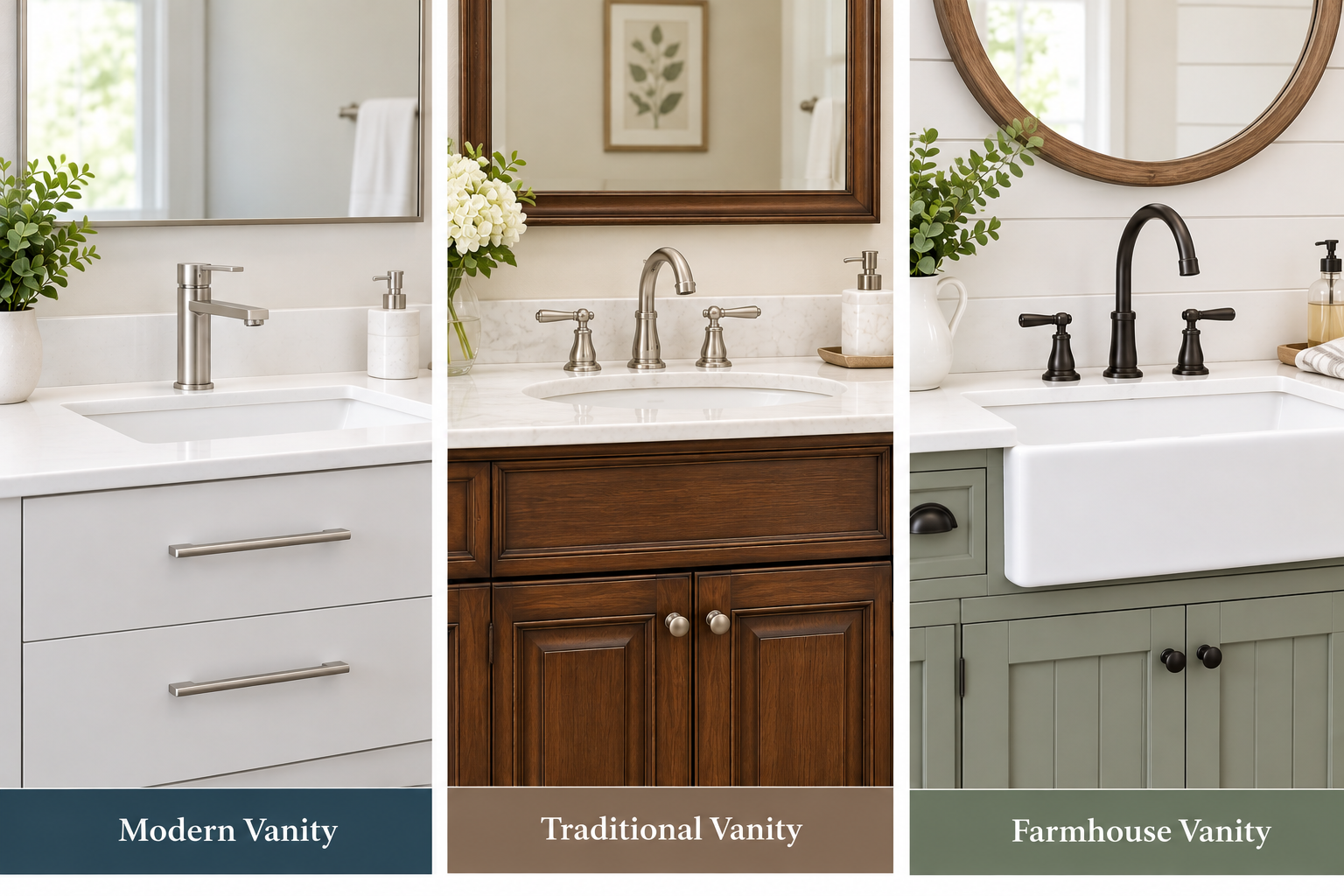
Most bathroom sink faucets fall into a few clear styles, so you can narrow the field fast.
- Modern or minimal: single-hole or wall-mount with clean lines, a look that shows up again and again in modern bathroom ideas.
- Traditional: widespread with lever or cross handles.
- Farmhouse or transitional: centerset or widespread with softly curved spouts.
- Vessel sink: a tall spout that clears the bowl rim.
Check spout reach too. The stream should land near the drain, not on the side of the bowl. That one detail prevents most splashing.
2. Choose a Finish That Fits Your Habits
Short answer: Chrome is the easiest to find, brushed nickel hides spots best, and matte black makes the boldest statement.
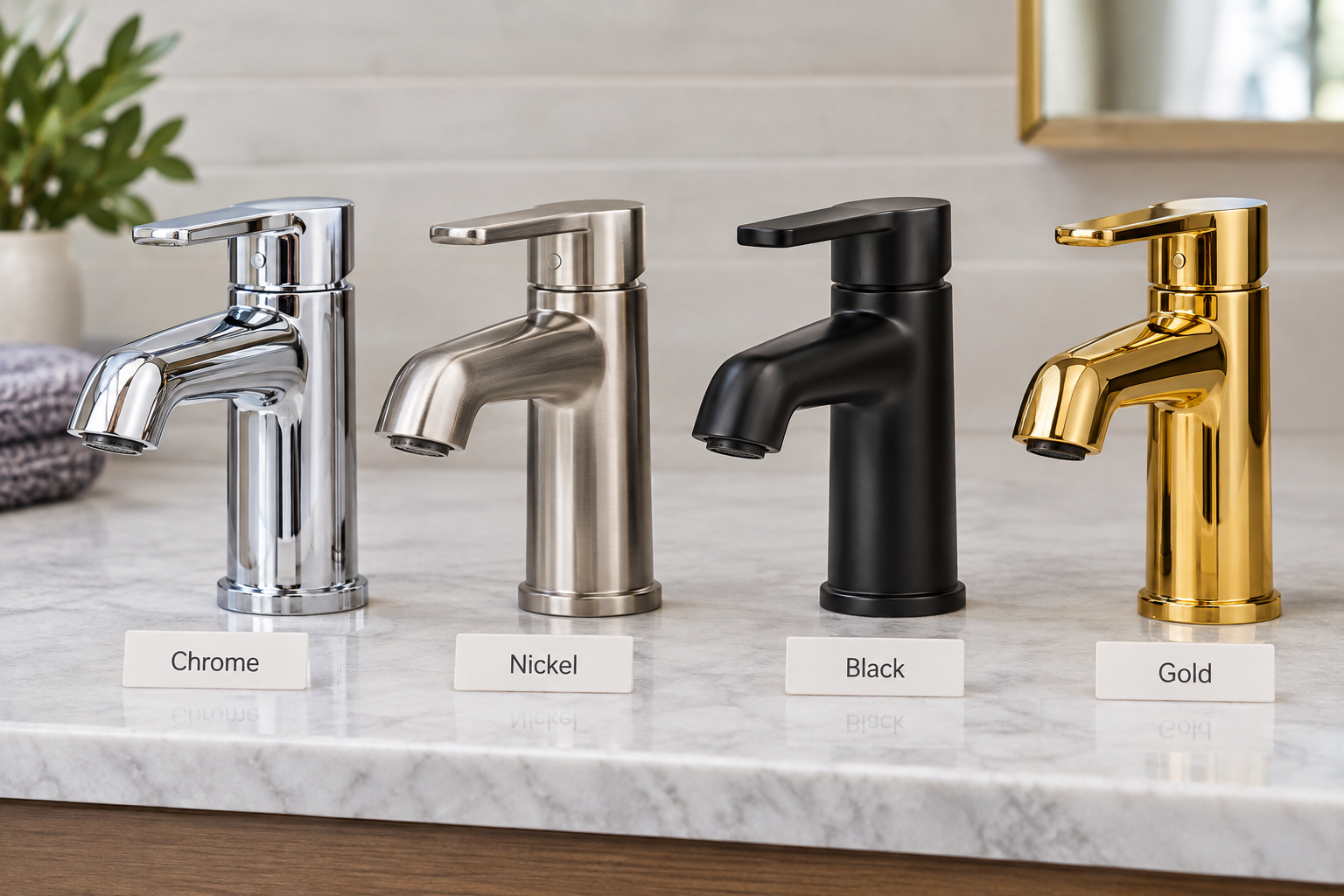
| Finish | Look | Upkeep | Good For |
|---|---|---|---|
| Polished chrome | Bright, classic | Shows fingerprints | Budget builds, any style |
| Brushed nickel | Soft, warm gray | Hides water spots | Busy family baths |
| Matte black | Bold, modern | Shows hard water spots and dust | Contemporary rooms |
| Brushed gold or brass | Warm, upscale | Durability varies by coating | Statement vanities |
| Oil-rubbed bronze | Dark, traditional | Darkens and ages over time | Rustic or traditional rooms |
Match your cabinet pulls and towel bars to the faucet, and keep to two metals per room, the same rule that keeps vanity finishes looking cohesive in our complete guide to bathroom vanities. In hard water areas, brushed finishes forgive more than glossy ones.
3. Set a Budget by Tier
Short answer: Most homeowners do well in the middle tier, where brass bodies and ceramic valves become common.
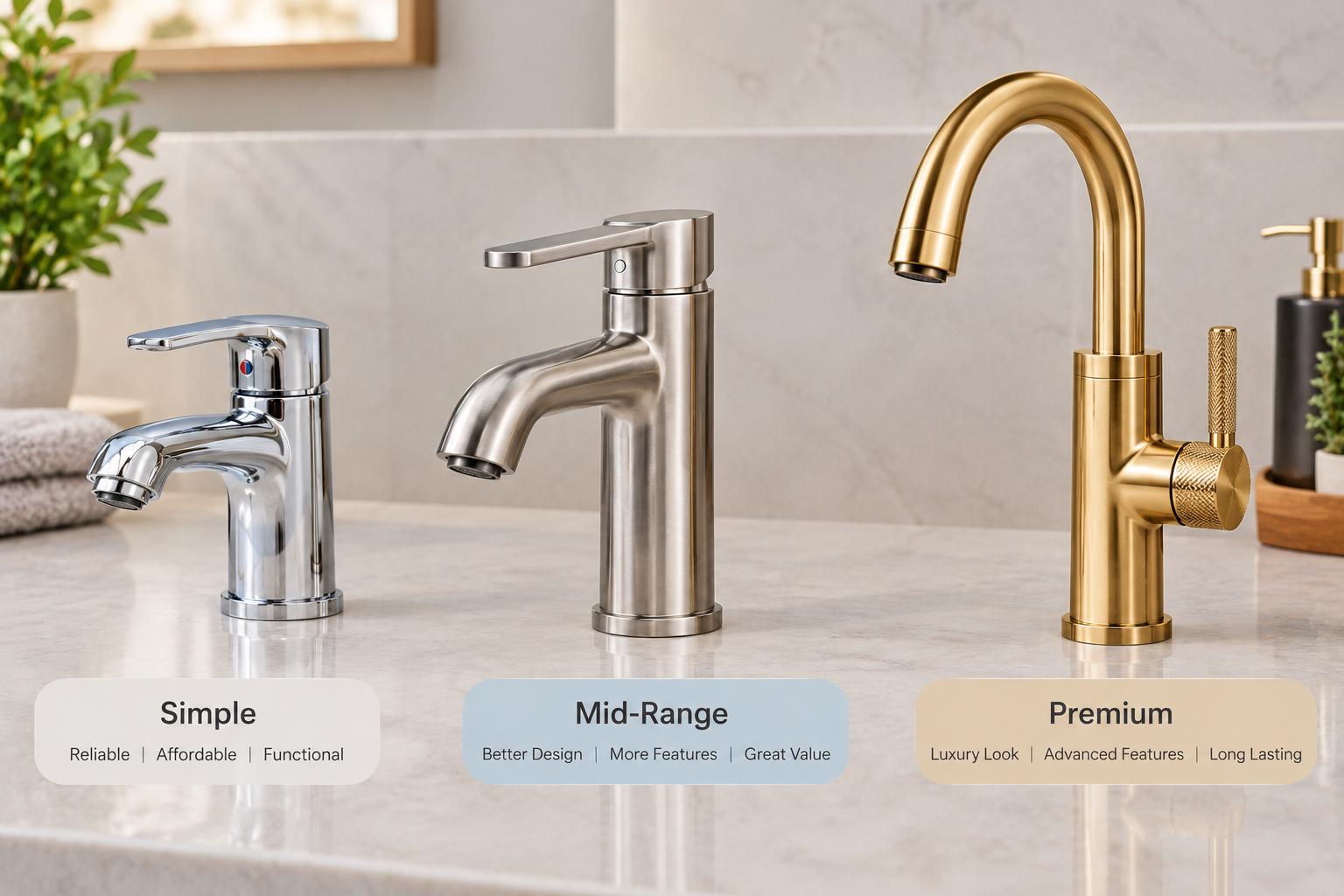
| Budget | Typical Price | What You Usually Get |
|---|---|---|
| Entry | Under $75 | Basic centerset or single-handle, simple finishes, shorter warranties |
| Mid-range | $75 to $200 | Brass bodies, ceramic cartridges, more finish choices |
| Premium | $200 and up | Designer shapes, premium finishes, touchless or wall-mount options |
Prices for bathroom sink faucets are approximate and vary by store. A rental or guest bath can stay in the entry tier. Your main bathroom usually deserves mid-range.
4. Check Quality Before You Buy
Short answer: Look for a brass body, a ceramic cartridge, lead-free certification, and a clear warranty.
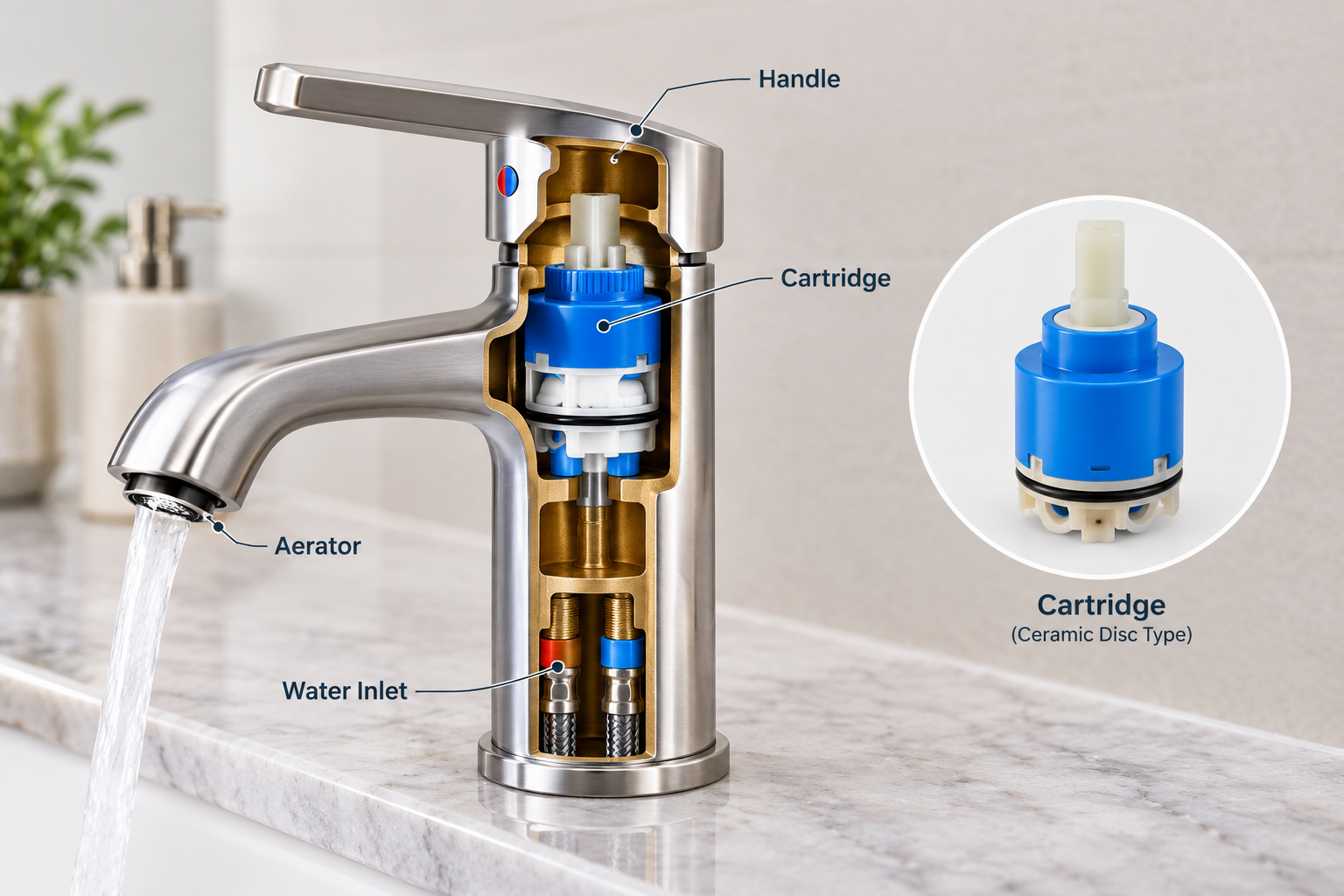
Two faucets can look identical while the best bathroom sink faucets differ inside. These are the details that matter:
- Solid brass body: resists corrosion better than plastic parts.
- Ceramic cartridge: gives smooth, drip-resistant handle action.
- NSF/ANSI 61 and 372 listing: confirms drinking water safety and low lead content.
- WaterSense label: confirms the 1.5 gallon per minute flow limit.
- Warranty: longer coverage on the finish and cartridge is a good sign.
5. Plan Your Install and Save Time
Short answer: A simple faucet swap usually takes 30 to 90 minutes if you prepare first.
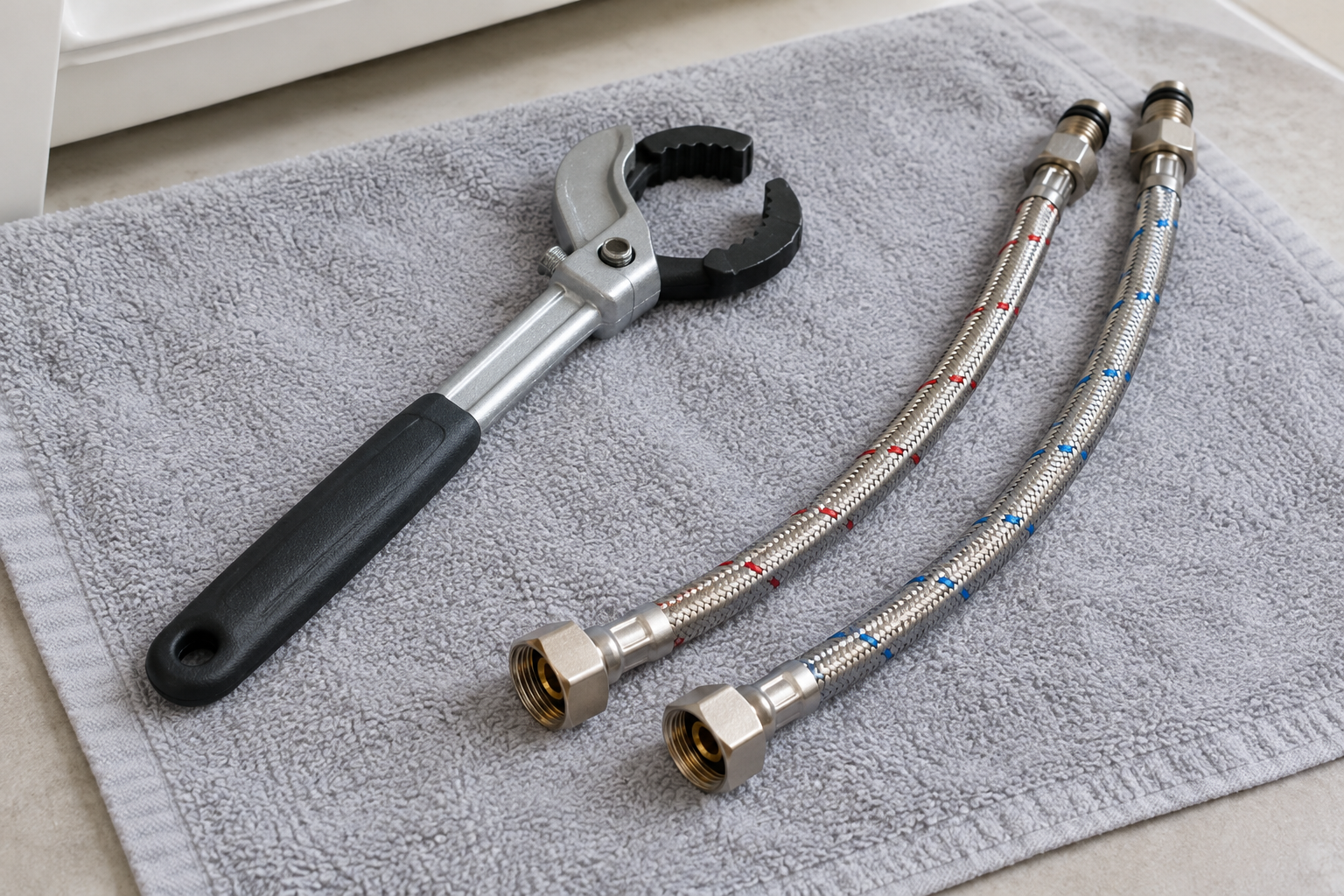
- Day before (15 minutes): measure the holes, buy new supply lines if needed, and test your shutoff valves.
- Step one (10 minutes): turn off both valves and open the old faucet to drain the lines.
- Step two (20 to 40 minutes): remove the old faucet and clean the surface.
- Step three (20 to 30 minutes): mount the new faucet and connect the supply lines.
- Final check (10 minutes): run the water to flush debris, then look for leaks.
Call a plumber if the valves are stuck, the pipes are corroded, or you want to install a wall-mounted faucet. If you are updating the entire bathroom, install the faucet after painting to prevent water drips from damaging the fresh finish.
6. Keep Your Faucet Looking New
Short answer: Wipe it dry, use mild soap, and clean the aerator every few months.
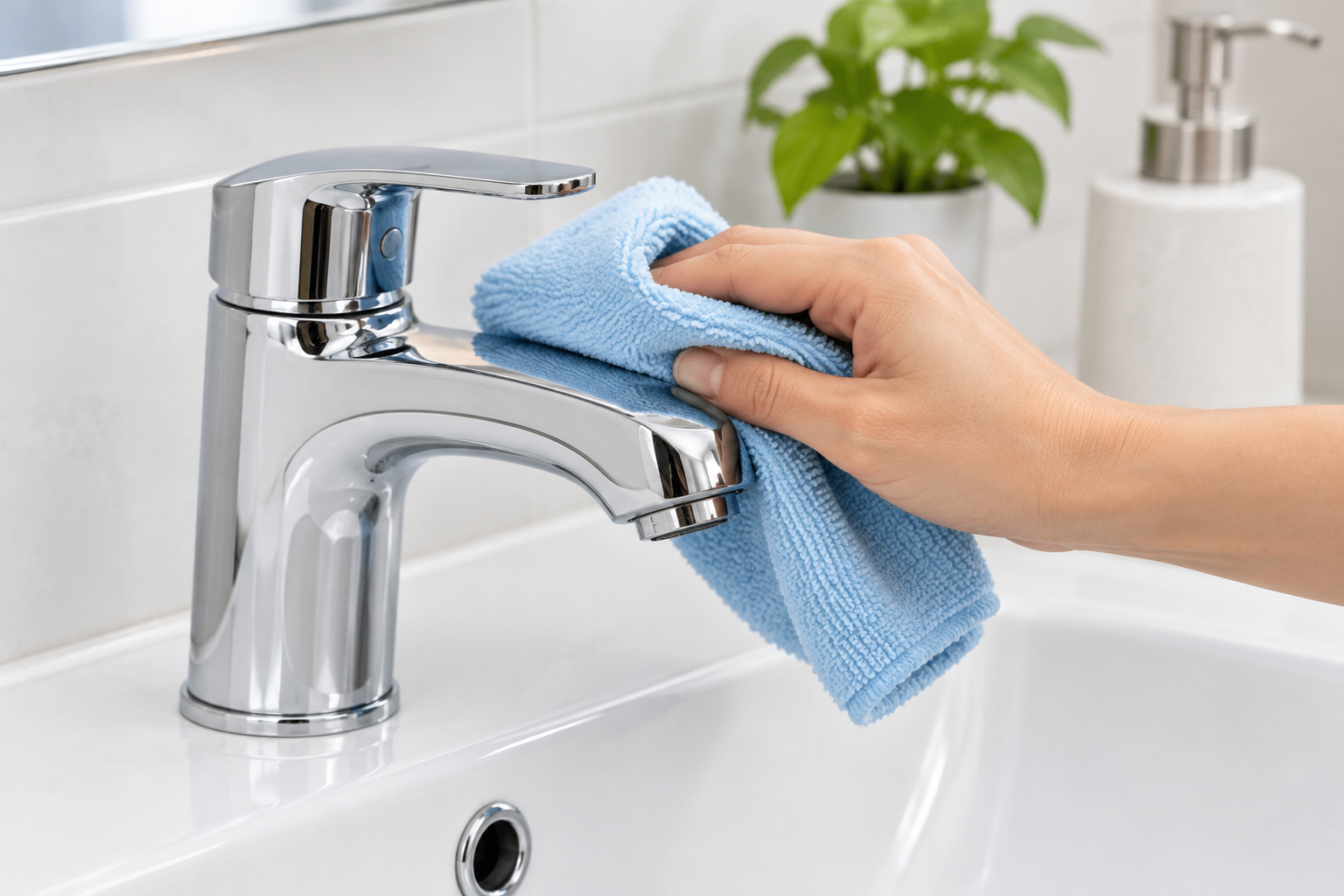
Harsh cleaners and scrubbing pads strip finishes, so stick to a soft cloth and mild soap. If water pressure drops, unscrew the small aerator at the spout tip and soak only that part in white vinegar, then rinse it. Always check the maker's care notes first, since some finishes dislike acids.
Frequently Asked Questions
What are the best bathroom sink faucets on a small budget?
A centerset in chrome or brushed nickel with a brass body and ceramic cartridge gives reliable value without paying for extras.
Can I replace a bathroom faucet myself?
Usually, yes. If your shutoff valves work and the new faucet matches your hole count, plan 30 to 90 minutes.
How do I know which faucet fits my sink?
Count the holes and measure between the outer ones. That tells you whether you need single-hole, centerset, or widespread.
Is matte black hard to keep clean?
It shows hard water spots and dust more than brushed nickel, so wiping it dry after use helps.
Conclusion
The best bathroom sink faucets are the ones that fit your sink, suit your style, and hold up in your water. Start with hole count, then pick your finish and budget, and check for brass, ceramic, and the WaterSense label. Do that, and replacing your faucet becomes a manageable weekend project instead of a guess.