

Introduction
You spend more time at your kitchen faucet than almost anywhere else in the house. You fill the kettle first thing in the morning, rinse vegetables before dinner, soak a stubborn pan, and give your hands a quick wash a dozen times a day. So when it starts to drip, the spray head sags, or the finish peels after two years, you notice it every single day.
The tricky part is that most kitchen faucets look alike in a product photo. Two pull-down models can sit on the same shelf with a hundred-dollar gap between them, and the difference is hidden inside: the cartridge, the valve, the faucet body, and the company standing behind it. That is exactly why the brand matters.
This guide walks through the best kitchen faucet brands one by one, including Moen, Delta, Kohler, Kraus, Franke, Pfister and Rohl, then helps you match a brand to your sink, your budget, and the way you actually cook.
What Actually Makes a Kitchen Faucet Brand Worth Trusting
Before we get into names, here is what separates a good brand from a good-looking one. Keep these in mind and you can judge any faucet, even one we do not cover.
Cartridge and valve quality: The cartridge is the part that controls water flow and temperature. A ceramic disc cartridge resists wear and stays smooth for years. A weak cartridge is the number one reason faucets start dripping.
Body material: Solid brass is the gold standard for durability and corrosion resistance. Zinc alloy and stainless steel are common in good mid-range faucets. Plastic bodies cost less and will not rust, but they are less sturdy and tend to feel loose over time.
Finish quality: A good finish protects the faucet surface from scratches, spots and fingerprints. Brands that offer spot-resistant or fingerprint-resistant finishes save you a lot of wiping.
Warranty: A limited lifetime warranty usually covers manufacturing defects in the body and finish, while electronic parts on touchless models often carry a shorter term, commonly around five years. Always read what is covered before you buy.
Replacement parts and customer service: This is the one most shoppers forget. A faucet is only as good as your ability to fix it ten years from now. Brands with big retail networks make cartridges, aerators and hoses easy to find.
Certifications: Look for ASME, CSA or NSF marks. They tell you the faucet has been tested for safety and water quality. Some very cheap faucets skip them, and that is worth knowing before you hook one up to your drinking water.
Water flow: Most kitchen faucets run at 1.5 to 1.8 gallons per minute (GPM). Local rules often cap flow at 1.8 GPM, and some areas require 1.5 GPM. A lower rate saves water, but it can feel slow when you fill a big stockpot.
The Best Kitchen Faucet Brands, One by One
Moen: The Reliable All-Rounder
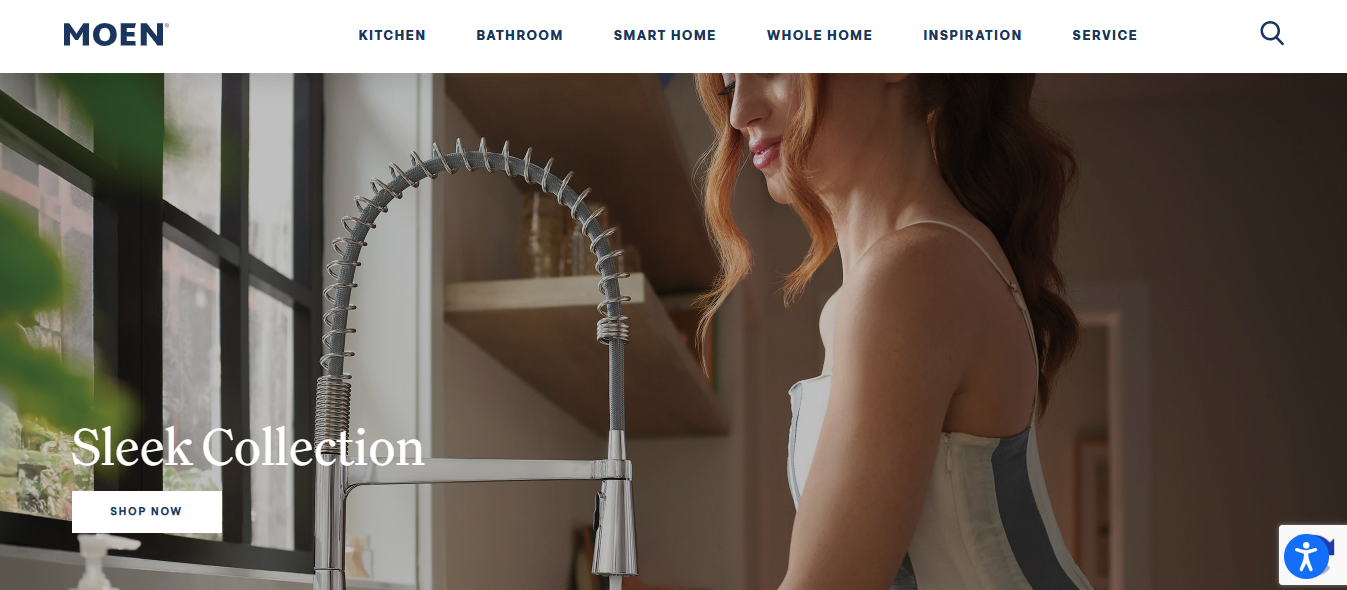
Moen is probably the brand most plumbers name first when someone asks for a dependable faucet. It makes kitchen faucets in almost every style, from simple single-handle models to high-end touchless designs, and it backs most of them with a limited lifetime warranty.
What it does well:
- Long-lasting cartridges that are easy to replace, with parts sold nearly everywhere
- Helpful features like Power Clean spray, Reflex hoses that move freely without tangling, and the Duralock quick-connect system that speeds up installation
- Spot Resist stainless and matte black finishes that hide water marks and fingerprints
- True touchless options through the MotionSense line
Models worth a look: The Moen Adler is a plain, practical pull-down that delivers a premium feel at an affordable price. The Moen Arbor is the stylish gooseneck most people picture when they think of a modern Moen. Its MotionSense version uses two sensors, one on the spout and one at the base, for hands-free operation.
Keep in mind: Some Moen models run at 1.5 GPM, which feels gentle for filling pots, though a boost button on certain models helps. Motion-sensor versions depend on power, so plan for batteries or a plug-in adapter.
Best for: First-time homeowners, DIY homeowners, rental upgrades, and anyone who wants a dependable faucet without drama.
Delta Faucet: Smart Features and Easy Daily Use
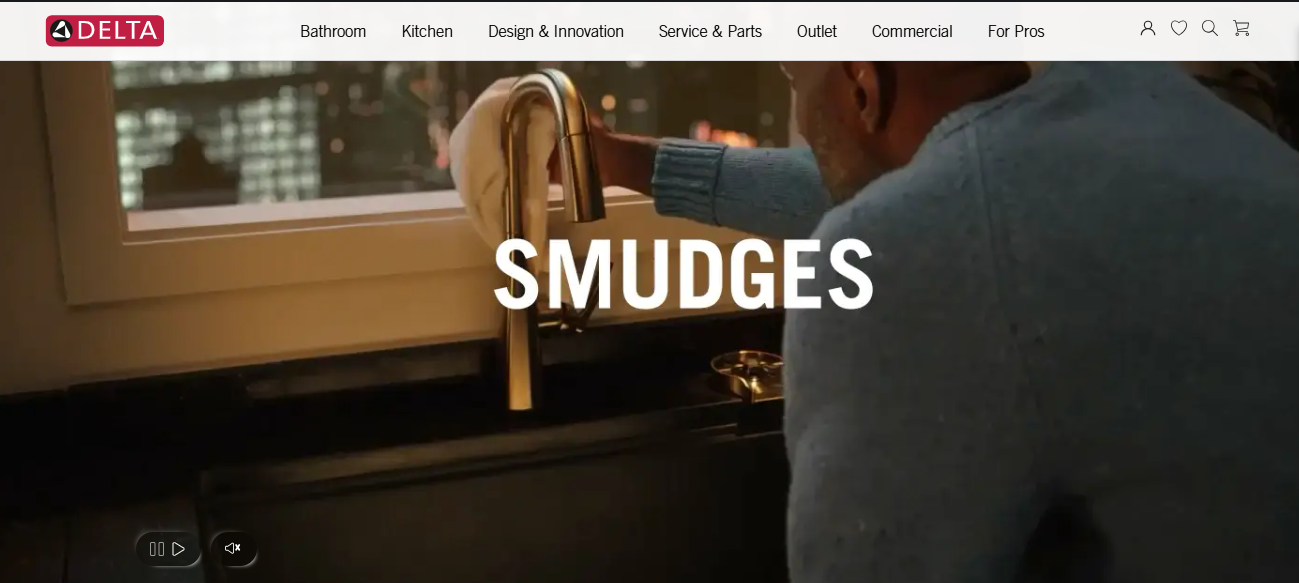
Delta is Moen’s biggest rival and a leader in pull-down kitchen faucets. Its signature strength is practical innovation. Delta also owns the luxury brand Brizo, which shares some of its engineering.
What it does well:
- Touch2O technology lets you turn the water on and off by tapping the spout or handle with a wrist or forearm. It is great when your hands are covered in dough.
- ShieldSpray creates a wider, softer stream that cuts splashing without losing cleaning power
- Magnetic docking keeps the spray head snug so it does not droop
- Diamond Seal valve technology is designed for leak resistance and a long service life
- Finishes like SpotShield stainless are built to resist fingerprints and spots
Models worth a look: The Delta Leland is a graceful high-arc design with touch activation. The Delta Trinsic has a clean, modern look and heavy-duty brass construction. The Delta Essa gives you touch control at a more moderate price.
Keep in mind: Delta’s touch models are more involved to install, since you also fit a small solenoid box and battery pack. The supply lines on some models are stiffer than braided ones, which makes tight cabinets a little fiddly.
Best for: Busy cooks, families, and anyone who wants a smart upgrade that really gets used.
Kohler: Premium Craftsmanship With a Long Reputation
Kohler has been making plumbing products since the 1870s, and you can feel the history in the weight and finish of its faucets. It sits in the premium tier, with prices to match, but the build quality and design polish are real.
What it does well:
- Solid, well-finished construction with a refined look
- Touchless models with responsive sensors positioned to avoid accidental activation
- Smart details such as a magnetic docking system and optional power boost for filling pots
- A large catalog of finishes and styles, from sleek contemporary to classic traditional
Models worth a look: The Kohler Simplice is the best known. It is a graceful pull-down with a flexible spring neck, and it comes in manual and touchless versions.
Keep in mind: It costs more than most mainstream brands, and touchless models like the Simplice Response can need an AC power connection, which may add cost if there is no outlet under your sink.
Best for: Kitchen remodelers, interior designers, and luxury home buyers who care about the details.
Kraus: Modern and Commercial Style Without the Luxury Price Tag
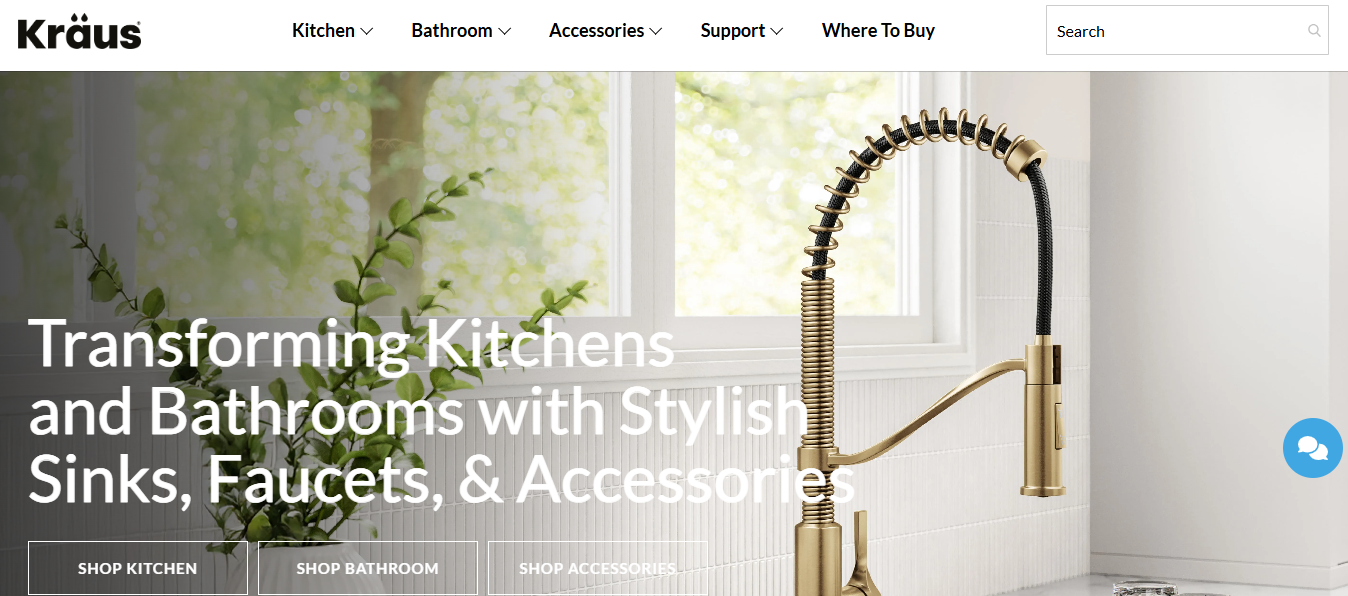
Kraus built its name on modern kitchen fixtures and sinks. If you like the look of a professional restaurant kitchen at home, this brand is a strong place to start.
What it does well:
- Commercial-style pull-down faucets with a flexible spring neck that reaches into every corner of the sink
- Strong output pressure, even when household water pressure is on the low side
- Bold, industrial and minimalist looks that stand out
- A limited lifetime warranty on popular models
Model worth a look: The Kraus Bolden is one of the most popular commercial-style choices in its price range. It handles low water pressure nicely and feels sturdy.
Keep in mind: Coiled spring necks are harder to clean because food particles can slip into the gaps. Some models offer a swivel of only about 180 degrees, which limits placement in certain sink layouts.
Best for: Homeowners who want a modern or industrial kitchen and good value for money.
Franke: The Sink Specialist That Also Makes Great Faucets
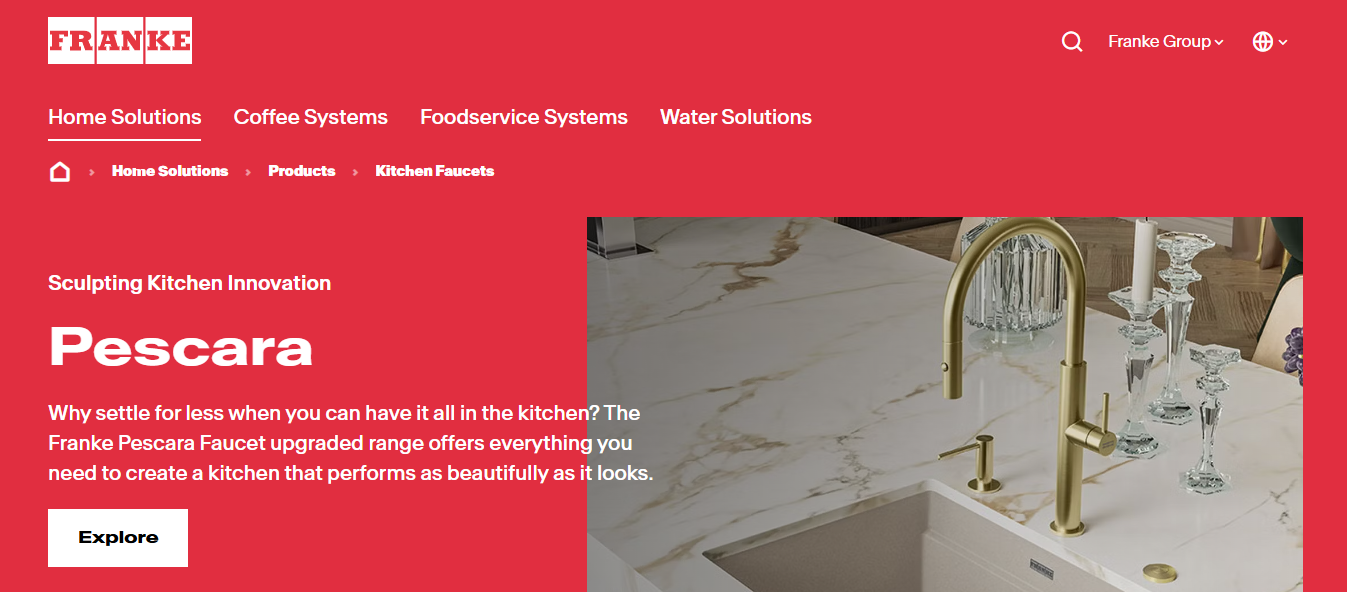
Franke is a Swiss company best known for stainless steel sinks, and its faucets are designed to work as a matched set. That is a real advantage if you are replacing both at once.
What it does well:
- Faucets that complement Franke kitchen sinks in scale, finish and proportion
- Pull-down and pull-out styles, including semi-professional designs
- A clean, understated European look that suits transitional and minimalist kitchens
Keep in mind: The lineup is smaller than Moen’s or Delta’s, and local parts support can vary depending on where you live. Check warranty terms for the exact model you choose.
Best for: Kitchen remodelers installing a new sink and faucet together.
Pfister: Dependable Choice for Budget-Conscious Shoppers
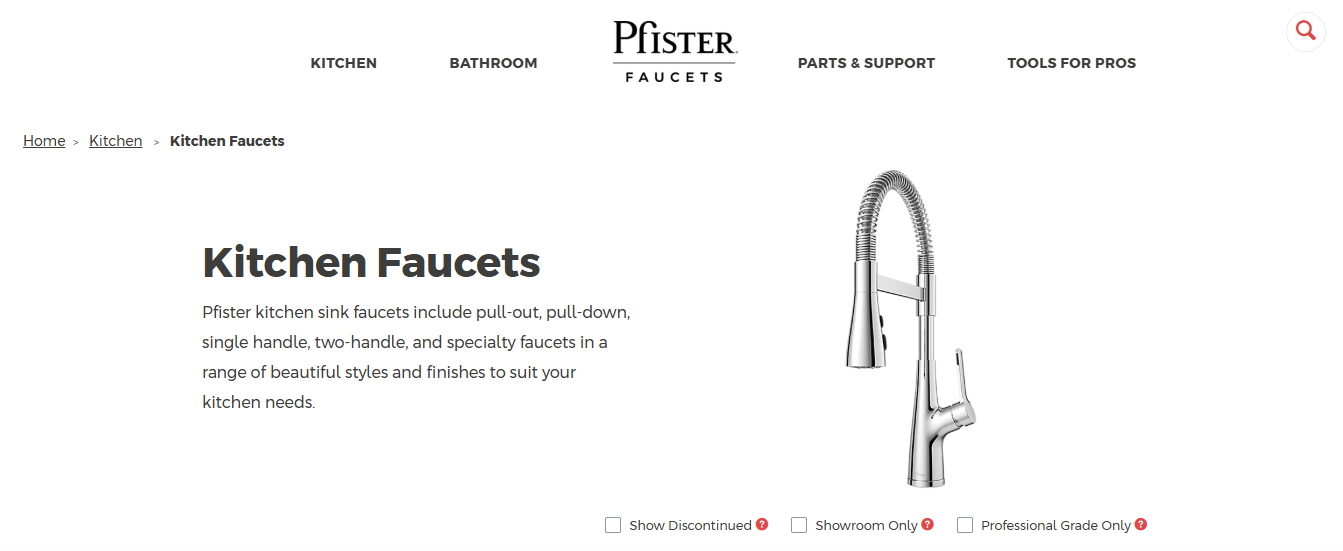
Pfister (often written Price Pfister in older articles) is a longtime American brand with solid mid-range faucets that are easy to find at big home improvement stores.
What it does well:
- Spot Defense finish that resists fingerprints and water spots
- Straightforward pull-down designs with a magnetic spray head dock on many models
- Good everyday value for money, with a limited lifetime warranty on many faucets
- Styles that fit traditional, transitional and modern kitchens
Keep in mind: You will find fewer ultra-premium or high-tech touchless options than at Moen, Delta or Kohler.
Best for: Budget-conscious shoppers, first-time homeowners, apartment owners and landlords who need something dependable at a fair price.
Rohl: Statement Faucets for Serious Design Lovers
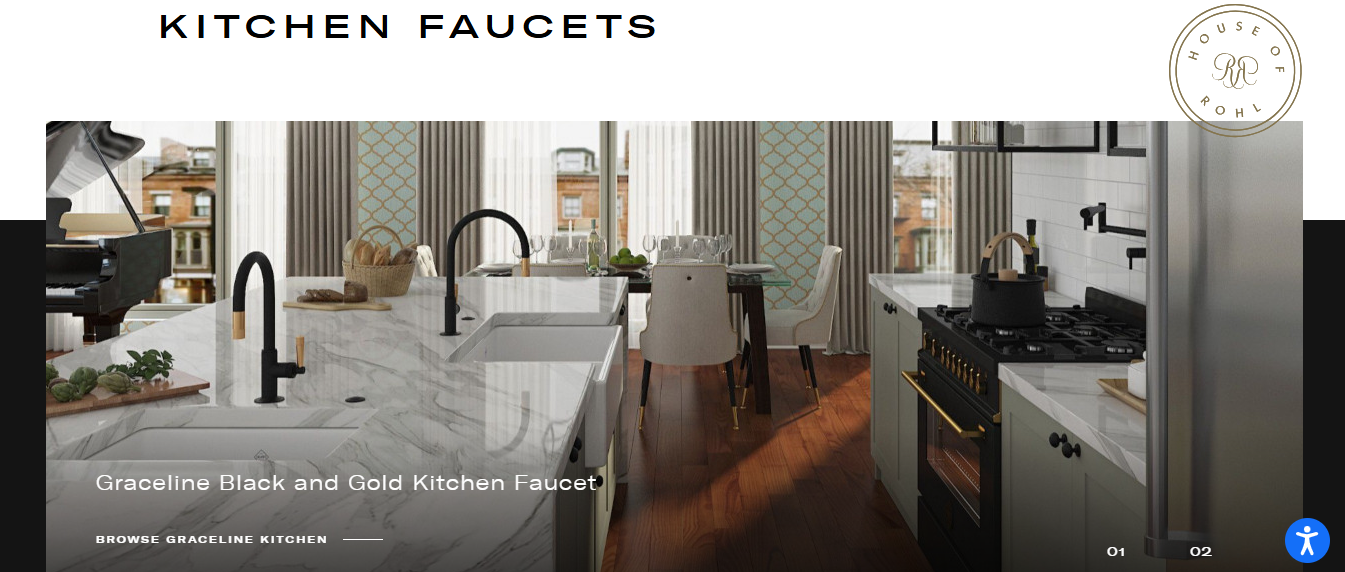
Rohl is a luxury brand with an Italian design heritage. Its sister brand, Perrin & Rowe, brings a classic English style to the same family.
What it does well:
- Bridge faucets, pot fillers, and bar faucets with a handcrafted, heirloom feel
- Heavy solid brass construction and rich finishes like polished nickel, oil-rubbed bronze and unlacquered brass
- A natural match for farmhouse sinks and traditional or vintage kitchens, especially the Country Kitchen collection
Keep in mind: Prices are high, and some designs prioritize looks over modern conveniences like touchless activation.
Best for: Luxury home buyers and designers working on a high-end kitchen where the faucet is a focal point.
Other Kitchen Faucet Brands Worth Knowing
Your shortlist should not stop at the seven above. These brands show up often in good kitchens too:
- Grohe: German engineering with smooth SilkMove ceramic cartridges and the durable StarLight finish. A good premium alternative to Kohler.
- Hansgrohe: Another German maker. Its semi-pro pull-out and spring-neck designs, like the Joleena, are heavy brass and have a great range of motion.
- American Standard: Practical, widely available faucets at mid-range prices.
- Brizo: Delta’s luxury sister brand, known for refined styling and rich finishes.
- Blanco: A German sink maker with elegant matching faucets.
- Elkay: Strong in sinks and filtered water solutions, with straightforward faucets to match.
- Danze: Good style at fair prices, with a transitional leaning.
- Glacier Bay: Home Depot’s house brand for simple, budget-focused faucets.
- Kingston Brass: Traditional and vintage looks at low prices.
- Vigo: Affordable modern designs with plenty of features, including touchless options.
- WEWE: A budget option that does the basics well. It often has a plastic body frame and may lack ASME or CSA certification, so it suits light use and tight budgets rather than a forever faucet.
Moen vs Delta: Which One Should You Pick?
This is the question people ask most, and honestly, you cannot go badly wrong with either. Here is how they differ in daily life.
Choose Moen if you want the simplest, most dependable setup, a faucet that is quick to install, and replacement parts you can find in any hardware store. Moen’s MotionSense is also one of the better true touchless systems.
Choose Delta if you like the idea of touch activation and a faucet that stays put thanks to strong magnetic docking. Delta’s ShieldSpray is a genuine splash reducer, and its Touch2O models still let you operate the handle normally if the batteries die.
The honest tie-breaker: Look at the finish, the spout height, and the price on the specific model. Brand matters less than the individual faucet once you are down to these two.
Understanding Faucet Types Before You Shop
Pull-down vs pull-out. A pull-down faucet has a tall, arched spout and a spray head that pulls straight down into the sink. It works well for deep, single-basin sinks. A pull-out faucet has a shorter spout and a longer hose, which suits shallow sinks and kitchens with cabinets above the faucet.
Single-handle vs double-handle. Single-handle faucets are easier to use and install and take up less space. Double-handle faucets give you finer temperature control and a more traditional look, but they are slightly harder to install.
Touchless and touch-activated. A touchless faucet uses a motion sensor to detect your hand. A touch-activated faucet turns on when you tap the spout. Both are more hygienic and convenient when your hands are full, and both need batteries or power.
Commercial-style faucets. These use a coiled spring neck and a big spray head for a restaurant look and heavy-duty rinsing.
Bridge faucets. Two handles connected by a decorative pipe, a favorite in traditional and farmhouse kitchens.
Pot fillers and bar faucets. A pot filler is a wall-mounted tap above the stove for filling large pots. A bar faucet is a smaller faucet for an island or wet bar.
High-arc vs low-arc. High-arc spouts give you room for tall pots. Low-arc faucets suit windows or low cabinets.
Materials and Finishes That Make a Difference
Body materials
- Solid brass: The most durable and corrosion-resistant. Costs more.
- Stainless steel: Rust-resistant, easy to clean and very popular in modern kitchens.
- Zinc alloy: Common in mid-range faucets and perfectly fine when paired with a quality finish.
- Plastic: The cheapest and lightest. Fine for a rental or a short-term fix, but not a lifetime choice.
Finishes ranked by how easy they are to live with
- Spot-resistant stainless and brushed nickel: The easiest to maintain because they hide spots and fingerprints.
- Matte black: Looks sharp and hides fingerprints, but can show hard water marks and scratches if cleaned with harsh scrubbers.
- Chrome: Affordable and simple to wipe down, though it shows every fingerprint and water spot.
- Oil-rubbed bronze, bronze and polished nickel: Warm, rich looks, with a finish that can develop character over time. Gentle cleaning matters.
Cleaning tip: Use mild dish soap and a soft cloth. Skip abrasive pads, bleach and strong cleaners, which can damage protective finishes and void a warranty.
The Parts Inside Your Faucet (and Why They Matter)
Knowing a few components makes you a smarter shopper.
- Ceramic cartridge: Controls water flow and temperature. A good one makes the handle feel smooth.
- Aerator: The small screen at the tip of the spout that regulates water flow and mixes in air. Clean it every few months, especially in hard water areas.
- Spray head and hose: The spray head gives you multiple spray patterns, while a flexible hose and counterweight pull it back into place.
- Magnetic docking: Holds the spray head firmly in the spout so it does not sag.
- Diverter: Switches the water between stream and spray.
- Supply lines: Connect the faucet to your home’s water supply. Braided lines are usually easier to bend and route.
- Flow restrictor: Limits flow to meet water efficiency standards.
- Mounting hardware and base plate (escutcheon): Holds the faucet steady and can cover extra sink holes.
Installation: What to Check Before You Buy
Count your sink holes. Look at the kitchen sink deck and count the mounting holes. A one-hole installation works with most modern single-handle faucets. If you have three holes, a faucet with a base plate can cover the extra openings. Never buy a faucet that needs more holes than your sink has, because drilling into a sink is difficult and risky.
Check the space. Measure from the faucet hole to the back wall or window, and make sure the spout height clears any cabinets above.
Decide on power. Touchless and touch faucets need batteries or an outlet under the sink. Plan for that before you pick one.
Should You Install It Yourself or Hire a Plumber?
Basic manual faucets are very doable for a DIY homeowner with a basin wrench and an hour or two. Touchless faucets, wall-mount designs and anything that needs new plumbing connections are worth handing to a plumber. Some brands, like Hansgrohe, recommend professional installation, though many people manage it themselves.
Use a faucet adapter if needed. If your supply connections do not match, an inexpensive adapter can save you a trip back to the store.
Water pressure matters. Most homes run at 50 to 60 psi, but weak pressure around 40 psi can make some faucets feel sluggish. Faucets with good flow design handle low pressure better.
ADA Compliance and Accessibility
If you are designing for older adults or anyone with limited hand strength, look for ADA compliant faucets with lever handles or touch activation. Touchless and touch-activated models are easier on arthritic hands, and a pull-out sprayer helps people who cannot reach into a deep sink.
Common Mistakes to Avoid
- Buying on looks alone. A pretty faucet with a weak cartridge becomes an expensive problem.
- Ignoring the warranty fine print. Lifetime does not always mean what you think. Read what is covered.
- Forgetting about replacement parts. Rare brands can be hard to repair.
- Skipping the hole count. This is the most common installation headache.
- Choosing a finish that fights your water. In hard water areas, spot-resistant stainless or brushed nickel saves a lot of scrubbing.
- Assuming touchless means maintenance free. Batteries, sensors and control boxes still need attention.
- Paying for features you will not use. A simple manual faucet from a trusted brand beats a flashy one from an unknown company.
Frequently Asked Questions
Is Kohler Better Than Moen?
Not necessarily. Kohler leans premium with more design polish, while Moen offers better value and easier parts availability. The right one depends on your budget and style.
Do Expensive Kitchen Faucets Really Last Longer?
Often, yes, because the materials and cartridges are better. But a well-made mid-priced Moen or Delta can easily outlast a poorly built luxury-looking one.
How Long Should a Kitchen Faucet Last?
Typically 15 to 20 years, though cheaper faucets may need replacing sooner.
Which Kitchen Faucet Has the Best Warranty?
Moen and Delta are well known for limited lifetime warranties. Kraus and Pfister also offer strong coverage on many models. Remember that touchless electronics usually have a shorter warranty.
Is a Touchless Kitchen Faucet Worth It?
If you cook often or have kids, absolutely. Just be ready for batteries or a power outlet and a higher price tag.
What Is the Difference Between a Pull-Down and a Pull Out Faucet?
A pull-down has a taller arch and works well for deep sinks. A pull-out has a lower spout and a longer hose, which suits shallow sinks and low cabinets.
Can I Install a Kitchen Faucet Myself?
A basic faucet is a manageable weekend job for most DIY homeowners. Touchless models and complex installs are better left to a plumber.
Final Thoughts
The best kitchen faucet brand is the one that fits your sink, your budget, and your daily routine. If you want one safe recommendation, start with Moen or Delta. If you care about luxury design, look at Kohler or Rohl. If you want a modern look without overspending, try Kraus. For a dependable budget pick, Pfister is hard to ignore. Franke makes sense when your sink and faucet need to match.
Whatever you choose, check the cartridge, finish, warranty and parts availability before you click buy. A few minutes of homework now saves you years of drips, spotty finishes and frustration later.