

Introduction
You probably scrub your sink every night, but when did you last clean the kitchen sink drain itself? It's where grease, food scraps, and soap residue quietly pile up, and it's the real source of most slow drains and that sour, swampy smell that drifts up when you run the water. The good news is that most of it can be handled with dish soap, hot water, and a few simple tools, and a short routine once a week keeps it from coming back. This guide covers what actually causes clogs and odors, how to clean every part of a kitchen sink drain from the stopper down to the P-trap, which methods really work (and which are overrated), and when it's time to call a plumber.
Key Points
- Most smells start at the surface. The slime under the stopper, around the drain opening, and inside the garbage disposal is the usual culprit, so scrub those first.
- A weekly habit does most of the work. Dish soap and very hot tap water once a week stops grease from building up, and a monthly enzyme cleaner or baking soda and vinegar treatment keeps things fresh.
- Baking soda and vinegar freshens, it doesn't unclog. For a real clog, use a plunger, clean the P-trap, or feed a drain snake through.
- Be careful with boiling water. It's fine for metal pipes, but use very hot tap water on plastic pipes and porcelain sinks.
- Chemical drain cleaners are a last resort. They're harsh and hazardous, and they should never be mixed with other cleaners.
- Prevention is mostly about what stays out. Keep grease, coffee grounds, pasta, rice, and stringy scraps out of the drain, and use a strainer.
- Know when to stop. Call a plumber if several drains are slow, the clog keeps coming back, you see leaks, or a sewage smell won't go away.
| Problem | Most likely Cause | Start with |
|---|---|---|
| Bad smell from the drain | Slimy buildup under the stopper or in the disposal | Scrub the stopper and drain opening |
| Slow draining | Grease and food buildup in the pipe or trap | Hot water and dish soap, then a plunger |
| Standing water | A partial or full clog | Plunger, then drain snake or P-trap cleaning |
| Gurgling sounds | Partial clog or a venting problem | Plunger first, plumber if it persists |
| Tiny flies around the sink | Drain flies breeding in the slime | Scrub the drain and use an enzyme cleaner |
| Water backing up into the other bowl or dishwasher | A clog further down the line | Snake the drain or call a plumber |
What Causes a Kitchen Sink Drain to Smell or Clog?
Short answer: Most kitchen sink drain problems come from grease, food scraps, and soap residue that stick to the pipe walls, feed bacteria, and slowly build up into slime and clogs.
It helps to know what you're up against, because each cause calls for a slightly different fix:
- Grease and cooking oil. Fat is liquid when it's hot, so it slides down the drain easily, then cools and hardens into a sticky coating on the pipe walls that traps everything else.
- Food scraps and coffee grounds. Small bits settle in the P-trap, the curved pipe under the sink, and starchy foods like rice and pasta swell once they're wet.
- Soap scum and detergent residue. Mixed with the minerals in hard water, soap leaves a gummy film inside the pipe.
- Biofilm. This is the slimy layer of bacteria that feeds on all of the above, and it's the main cause of drain odor. It builds up under the stopper, around the drain opening, and inside a garbage disposal.
- A dry P-trap. The trap holds a small plug of water that blocks sewer gas. In a sink that's rarely used, that water can evaporate and let smells through.
- A blocked vent or main line. If several drains are slow or gurgling, the problem may be deeper than your kitchen sink.
Signs It's Time to Clean Your Kitchen Sink Drain
Don't wait for a full clog. Watch for these early warnings:
- Water drains more slowly than it used to
- A sour, rotten, or musty smell when the water runs
- Slime or residue on the underside of the stopper
- Tiny flies hovering around the sink
- Gurgling noises after the water goes down
- Water pooling in the sink after you've drained it
What You'll Need
Most of the supplies are probably already in your kitchen:
- Rubber gloves and a flashlight
- Dish soap and a kettle
- Baking soda and white vinegar
- An old toothbrush or bottle brush
- A cup plunger (the flat-bottomed kind made for sinks, not the flanged toilet plunger)
- A bucket, a towel, and adjustable pliers
- A hand drain snake (inexpensive and sold at any hardware store)
- An enzyme drain cleaner, optional but handy for maintenance
Before you start, put on gloves, and if you have a garbage disposal, switch it off at the wall switch and the breaker before reaching anywhere near it. Never put your hand into a disposal, and never mix drain cleaners with anything else.
How to Clean a Kitchen Sink Drain Step by Step
The steps below go from the simplest, most routine cleaning up to the more involved fixes. For a smelly or slow drain, start at the top and stop as soon as the problem is solved.
1. Start With the Stopper, Strainer, and Drain Opening
Short answer: Pull out the stopper and strainer basket and scrub both sides with dish soap and a brush, because the slime on the underside is where most drain smells come from.
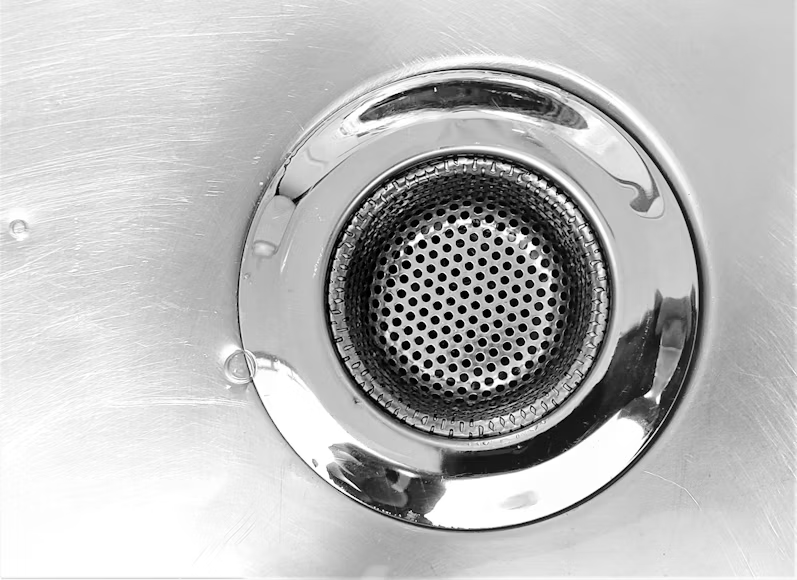
Lift or twist the stopper out of the drain (some unscrew, some simply pull up). Many kitchen sinks also have a drain basket strainer that stays attached, but you can still scrub it and the rim of the drain flange around it. Use an old toothbrush and hot, soapy water to scrub the stopper, the strainer, and as far down into the drain opening as you can reach. You'll likely be surprised by how much gunk comes off. Rinse everything and put it back. This single step solves more bad-smell complaints than any chemical product.
2. Flush With Hot Water and Dish Soap
Short answer: Squirt a generous amount of dish soap down the drain and follow it with very hot tap water for a couple of minutes, which cuts through light grease and carries it away.
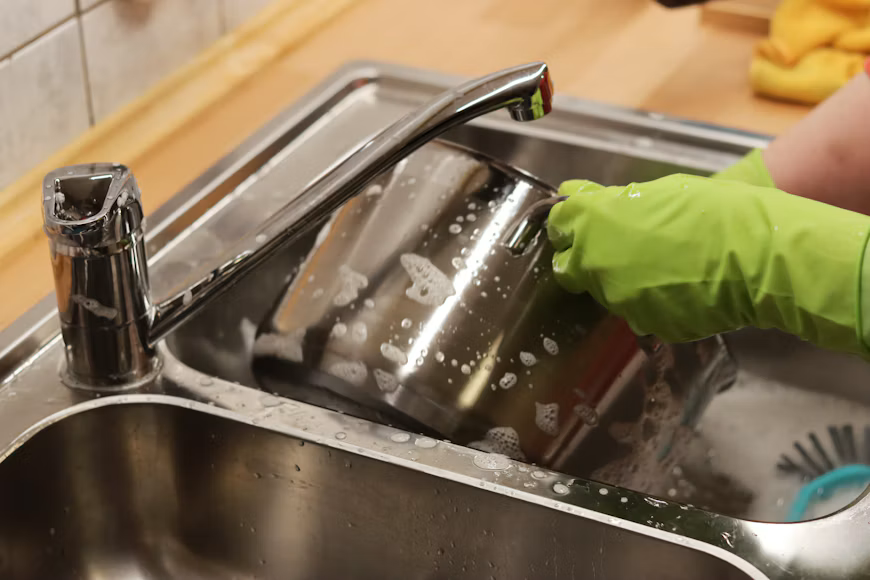
Dish soap is designed to break grease into tiny droplets that rinse away with hot water, which is exactly what a kitchen drain needs. Add a good squirt of soap, then run the hot tap for two to three minutes. Doing this weekly, and after any greasy meal, is the single best way to prevent buildup. It won't dissolve a solid clog, but it keeps one from forming.
3. Freshen With Baking Soda and Vinegar
Short answer: Baking soda followed by white vinegar is a fine way to freshen a drain and loosen light film, but it won't dissolve a serious clog.
Pour about half a cup of baking soda down the drain, follow with a cup of white vinegar, then cover the opening with the stopper and let it sit for 15 to 30 minutes. Flush with hot water. The fizzing gently agitates light residue, and baking soda helps neutralize odors.
Here's the honest part: baking soda is a base and vinegar is an acid, so they largely cancel each other out into salty water and carbon dioxide. That's why it works best as a monthly freshening routine rather than a clog remover. For a real blockage you need a plunger, a snake, or the trap itself. If you want to get more out of the ingredients, you can also use them separately, baking soda first with hot water, then vinegar later.
4. Use an Enzyme Drain Cleaner for Buildup and Odor
Short answer: An enzyme (biological) drain cleaner uses natural bacteria and enzymes to digest grease, food residue, and soap film, and it's the best hands-off option for stopping smells without harsh chemicals.
Enzyme cleaners work slowly, usually overnight, so pour one down the drain at bedtime when the sink won't be used for several hours and follow the label for the amount. They're safe for pipes and generally safe for septic systems, and they're especially useful for keeping the organic film that feeds odors and drain flies under control. What they won't do is clear a hard blockage like a lodged bone or a wad of fibers, so think of them as maintenance, not rescue.
5. Clean the Garbage Disposal Side of the Drain
Short answer: Scrub the underside of the rubber splash guard, then run ice cubes and citrus peels through the disposal to knock off residue and freshen it.
If your sink has a garbage disposal, it can be the biggest odor source of all. With the power off, use a flashlight and tongs to remove anything stuck inside, then scrub the underside of the rubber splash guard (the flap in the drain opening) with dish soap and an old toothbrush. That flap collects slimy residue that you can't see from above. Next, turn the power back on, run cold water, and grind a handful of ice cubes with a few lemon or orange peels. Finish with a minute of cold water. Avoid putting grease, bones, stringy vegetables like celery, and starchy foods such as pasta or rice in the disposal, and skip bleach or caustic cleaners in there.
6. Use a Plunger on a Slow or Clogged Kitchen Sink
Short answer: A cup plunger can clear many kitchen clogs in minutes if you cover the other drain, fill the sink with enough water to cover the cup, and keep a tight seal while you plunge.
Remove the stopper, then block any other drain opening or the overflow with a wet rag, since air escaping through those spots kills the suction. If you have a double sink with a disposal, block the other side too. Add enough water to cover the plunger's rubber cup, press down to seal, and plunge firmly up and down for about 15 to 20 strokes without breaking the seal. Pull away sharply and see whether the water drains. Repeat a few times if needed. Don't plunge right after using a chemical drain cleaner, since the caustic water can splash back at you.
7. Clean the P-Trap by Hand
Short answer: Place a bucket under the P-trap, unscrew the slip nuts, empty and scrub out the trap, then reassemble it and check for leaks.
The P-trap is the curved pipe under the sink, and it's the most common place for a stubborn clog to hide because heavy debris settles there. It also holds the water seal that keeps sewer gas out, so cleaning it often fixes both clogs and smells at once.
- Clear the cabinet and set a bucket underneath. Remove everything under the sink so you have room to work.
- Loosen the slip nuts. Turn the two large nuts at either end of the trap counterclockwise, by hand if possible or with pliers if they're snug.
- Remove the trap and empty it. Expect dirty, smelly water, so keep the bucket close. Dump the contents and pick out any debris.
- Scrub and rinse. Use a bottle brush and hot soapy water on the inside, and check the rubber washers for cracks or flattening.
- Reassemble. Put the trap back with the washers seated correctly and tighten the nuts snugly, but not so hard that you crack a plastic fitting.
- Test for leaks. Run water for a minute and feel around each joint with a dry paper towel. Any dampness means a nut needs another quarter turn or a washer needs replacing.
8. Use a Drain Snake for Deeper Clogs
Short answer: If the trap is clean and the sink still won't drain, feed a hand-drain snake into the pipe behind the trap, crank to hook or break up the clog, then pull out the debris and flush it with hot water.
With the P-trap removed, point the snake into the pipe that runs into the wall (the trap arm) and push the cable in until you feel resistance. Tighten the thumbscrew, then turn the handle clockwise as you push gently to break through or snag the clog. Pull the cable out slowly, wiping off whatever comes with it, and repeat until the cable moves freely. Reinstall the trap and run hot water for a few minutes. If the cable runs out before the clog does, or you hit the same blockage again, the problem is deeper in the line and a plumber's equipment is the next step.
Is Boiling Water Safe for Kitchen Sink Pipes?
Short answer: Boiling water is generally fine for metal pipes, but it can soften plastic traps and joints and can crack a porcelain sink, so very hot tap water is the safer everyday choice.
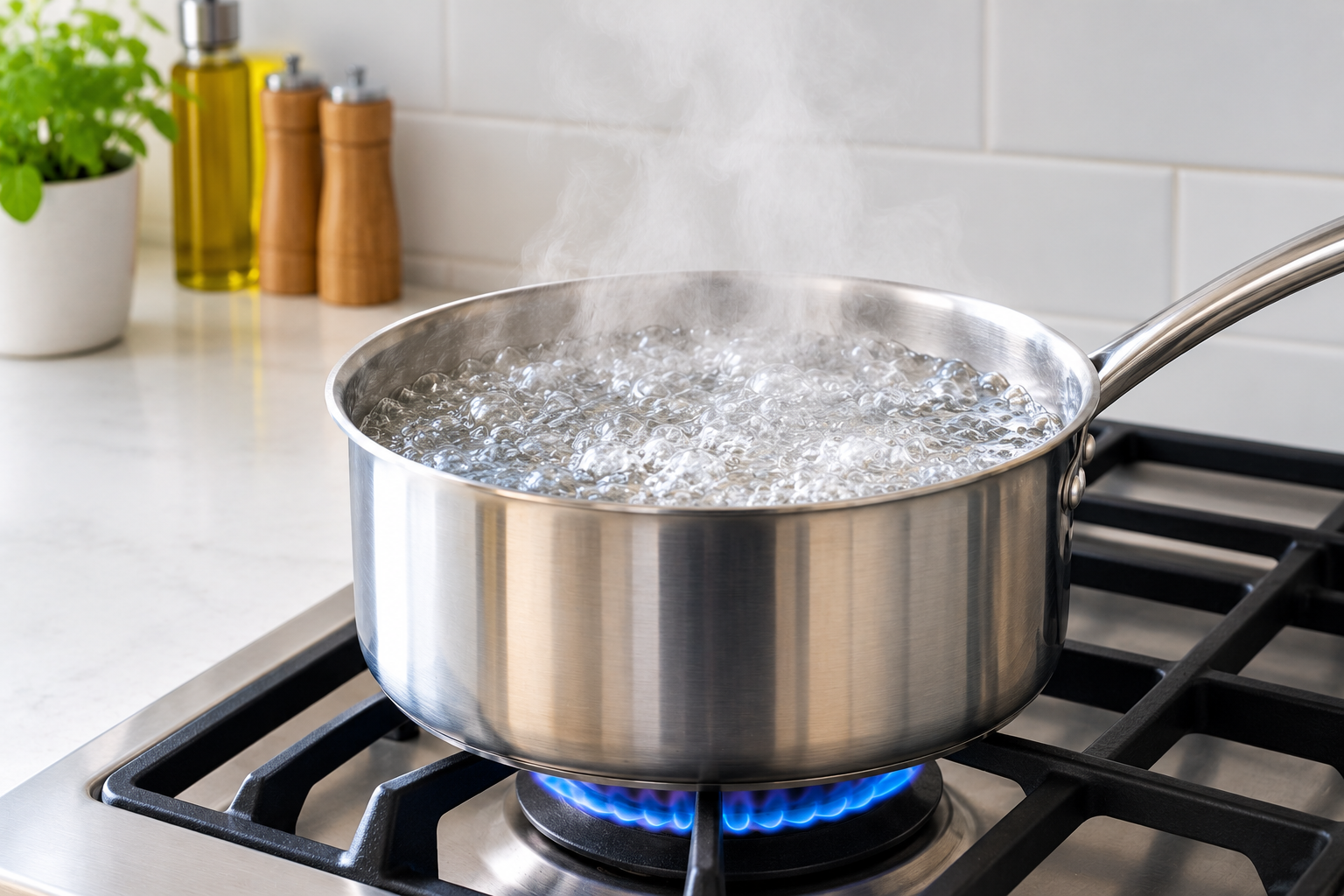
Boiling water can help melt a small grease clog, which is why you see it recommended everywhere. But many plastic drain pipes and fittings are rated for temperatures well below boiling, and repeated hits can loosen joints over time. If you have PVC or other plastic plumbing under the sink, use the hottest tap water instead. If your pipes are metal and you do want to use boiling water, pour it slowly and close to the drain in stages so it doesn't splash onto a porcelain or ceramic sink surface.
Should You Use a Chemical Drain Cleaner?
Short answer: Treat chemical drain cleaners as a last resort, because they're harsh on pipes and skin, hazardous to splash, and often leave a plumber dealing with caustic standing water if they fail.
Commercial drain cleaners work by using strong caustic or acidic chemicals that generate heat and break down clogs. They can damage older pipes and fittings, harm a garbage disposal, and release fumes in a closed space. If one doesn't work, you're left with a sink full of dangerous water that makes plunging or snaking hazardous. Never combine them with vinegar, bleach, ammonia, or other cleaners, since some mixtures release toxic gas. For most kitchen clogs, a plunger, a snake, and a cleaned P-trap do the job with none of those risks.
How to Get Rid of Bad Smells and Drain Flies
Short answer: Fix a smelly drain by removing the slime at its source: scrub the stopper and drain opening, clean the disposal, flush with soap and hot water, and follow with an enzyme cleaner.
Work through these in order:
- Scrub the stopper, strainer, and drain flange (Step 1).
- Clean the garbage disposal and its splash guard (Step 5).
- Flush with hot water and dish soap (Step 2).
- Use an enzyme cleaner overnight (Step 4).
- Clean the P-trap (Step 7).
- If the sink is rarely used, run water into it for a minute to refill the trap seal.
A few less obvious sources are worth checking too. A dirty dishwasher filter or a kinked or unlopped dishwasher drain hose can send odors back into the sink. And if you see drain flies, the small fuzzy flies that look like tiny moths, they're breeding in the slime. Killing the adults won't help on its own, so scrub the drain thoroughly and use an enzyme cleaner for several days to remove the film they feed on. If a sewer-type smell shows up in several drains around the house, the cause is probably a vent or main line problem, which is plumber territory.
What Never to Pour Down a Kitchen Sink Drain
Prevention is mostly about what doesn't go down in the first place:
- Grease, oil, and fat. Let it cool in a jar or can and throw it in the trash.
- Coffee grounds. They clump together and settle in the trap.
- Pasta, rice, and oatmeal. They keep swelling after they hit the water.
- Stringy or fibrous scraps like celery, corn husks, and potato peels.
- Bones and eggshells, especially in sinks without a disposal.
- Flour, batter, and dough, which turn into paste.
- Paint, solvents, and harsh chemicals.
- "Flushable" wipes and paper towels. They don't break down like toilet paper.
How Often Should You Clean a Kitchen Sink Drain?
Short answer: A quick hot-water and dish-soap flush once a week, with a deeper clean once a month, keeps most kitchen sink drains clear and fresh.
| Task | How Often |
|---|---|
| Scrub stopper and strainer | Weekly |
| Hot water and dish soap flush | Weekly, and after greasy meals |
| Clean garbage disposal | Every 1 to 2 weeks if you use it often |
| Baking soda and vinegar or enzyme cleaner | Monthly |
| Check under the sink for leaks or dampness | Monthly |
| Remove and clean the P-trap | Every 3 to 6 months, or when clogs and smells keep returning |
Households that cook with a lot of oil, wash greasy pans by hand, or run a disposal heavily may want to stick to the shorter end of each interval.
How to Stop Clogs Before They Start
Small habits matter more than any cleaning product:
- Use a drain strainer to catch food and empty it into the trash.
- Scrape plates and pans into the trash before washing, and wipe greasy cookware with a paper towel first.
- Run hot water for 15 to 30 seconds after washing dishes to push residue through the pipe.
- Run cold water while the disposal is running and for about 15 seconds afterward.
- Feed the disposal small amounts at a time rather than a full load of scraps.
- Keep grease and oil in a jar instead of the drain.
When to Call a Plumber
Short answer: Call a plumber if several drains are slow or backing up, the clog keeps returning after a snake, water leaks under the sink, or you smell sewage that doesn't go away after cleaning.
Other signs it's time to hand it off: gurgling toilets or tubs when the kitchen sink drains, water coming up in a different fixture, corroded or leaking pipes, or a clog that doesn't budge after you've tried a plunger and snake. Those usually point to a blockage in the main drain line or a venting problem rather than a kitchen sink issue.
As a rough guide, a simple kitchen drain clearing often runs about $100 to $350, while a stubborn clog that needs a camera inspection or heavier equipment can reach $500 or more. Prices vary by region and the scope of the job, so ask for an estimate up front.
Frequently Asked Questions
How do you clean a kitchen sink drain?
Remove the stopper and scrub it and the drain opening with dish soap and a brush, flush with hot water and dish soap, then follow up monthly with baking soda and vinegar or an enzyme cleaner. For slow drains, use a plunger or clean the P-trap.
Does baking soda and vinegar clean a sink drain?
It freshens a drain and loosens light residue, but it won't dissolve a real clog because the two ingredients mostly neutralize each other. Use it for monthly maintenance and rely on a plunger or snake for blockages.
How often should you clean a kitchen sink drain?
Do a quick flush with hot water and dish soap weekly and a deeper clean monthly. Pull and clean the P-trap every few months if you're prone to clogs.
What causes a foul smell in a kitchen drain?
The usual cause is slimy bacterial buildup under the stopper, around the drain opening, or inside a garbage disposal. A dry P-trap, a dirty dishwasher filter, or a venting problem can also let odors through.
Is boiling water safe for kitchen sink pipes?
It's generally fine for metal pipes, but it can soften plastic fittings and crack porcelain sinks. Very hot tap water is safer for everyday use.
Can dish soap remove grease from drainpipes?
Yes, paired with hot water it breaks up light grease so it can rinse away. It won't remove thick, hardened buildup, which needs a snake or a cleaned P-trap.
What is the best kitchen sink drain cleaner?
For maintenance, an enzyme cleaner is the gentlest option, along with weekly dish soap and hot water. For an actual clog, a plunger or drain snake is safer and usually more effective than chemical cleaners.
Conclusion
A clean kitchen sink drain isn't about a miracle product, it's about a handful of simple habits: scrub the stopper, flush with hot water and dish soap every week, give the disposal and trap an occasional deep clean, and keep grease and coffee grounds out of the pipe. When a clog does show up, work up from the plunger to the P-trap to the snake, and save chemical cleaners and plumber calls for the stubborn cases. Stay on top of it and that sour smell and slow drain won't have a chance to build. The same weekly-and-monthly rhythm works for the rest of the house too, which is the idea behind our monthly home maintenance checklist.