

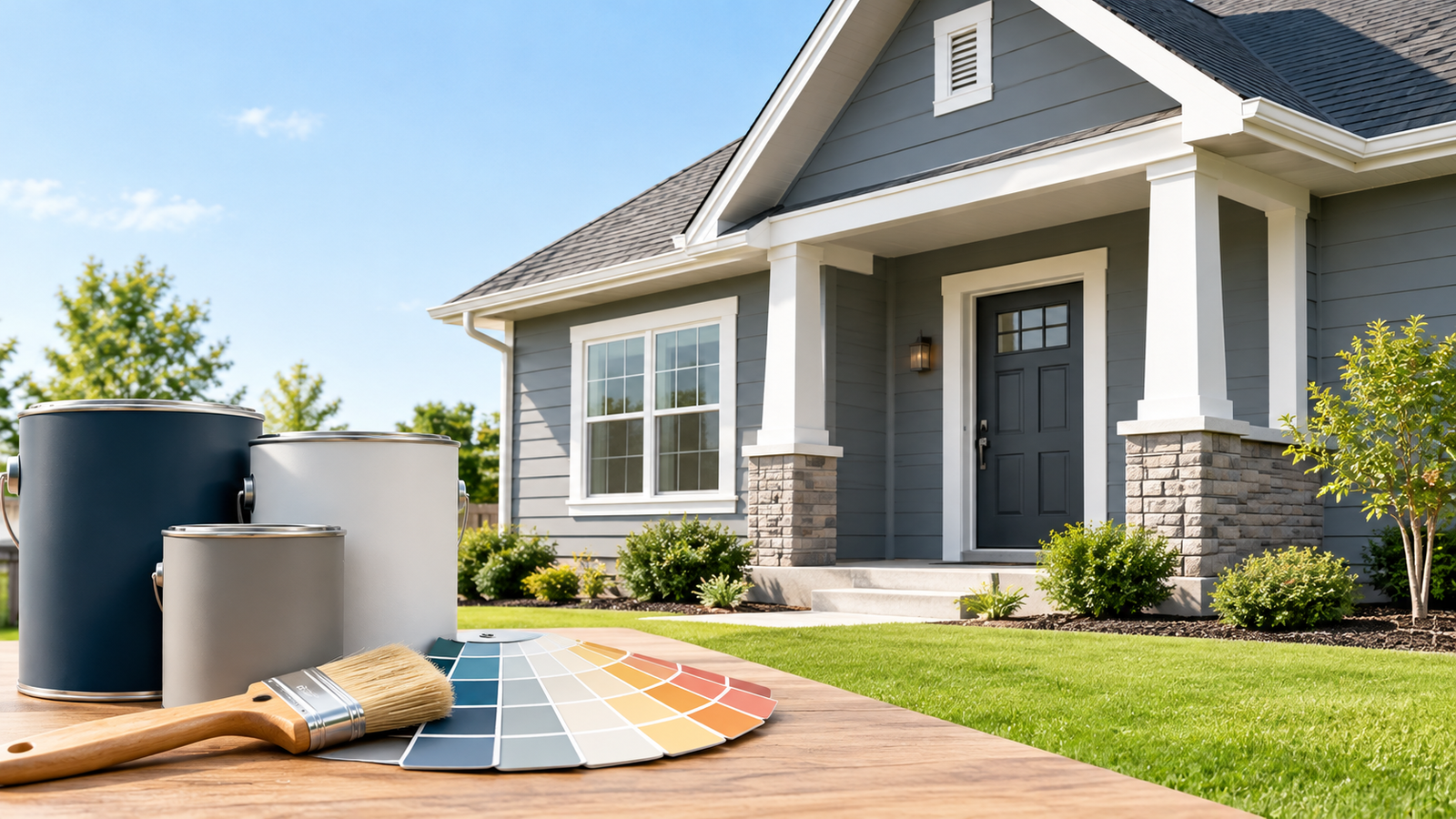
Introduction
If you want the short version, the best exterior paint for most houses is a 100% acrylic latex from a good brand, put over a clean, well-prepped surface in decent weather. That covers wood, vinyl, fiber cement and most trim. The exceptions are the ones worth knowing about: brick and stucco want a masonry or elastomeric coating, metal needs a rust-blocking primer, and your climate changes which features matter most.
Here's the part that surprises people. Which brand you buy matters less than you'd think. Paint jobs usually fail because of what happened before the first coat went on (dirty walls, loose paint left behind, wet wood, bare spots with no primer) or because someone painted in the wrong weather. A $90 gallon on a bad surface will peel before a $45 gallon on a good one. This guide covers how to match the paint to your surface and climate, what the main brands are actually good at, how to prep, what it costs, and how long you can expect it to last.
Key Points
- 100% acrylic latex is the default choice. It stays flexible, resists fading, and works on most exterior surfaces.
- Match the paint to the surface. Stucco and brick need masonry or elastomeric coatings, metal needs a rust-blocking primer, and vinyl needs vinyl-safe colors.
- Climate decides the details. Hot sun calls for UV-resistant and light colors, humid areas need mildew resistance, and cold regions need a flexible film and a paint that can be applied at lower temperatures.
- Prep is most of the job. Washing, scraping, caulking, and priming bare spots decide how long the paint lasts.
- "Paint and primer in one" is not a magic primer. Bare wood, bare masonry, rust, and stains still need a real primer.
- Spend more on paint, not less. On a typical house the gap between cheap and premium paint is a few hundred dollars, while labor costs thousands.
- Expect 5 to 10 years on average. Wood often needs paint sooner, while fiber cement and painted brick can last much longer.
Quick Picks at a Glance
| Surface | Best Type of Paint | Solid Choices To look At | Watch Out For |
|---|---|---|---|
| Wood siding | 100% acrylic latex over primer | Sherwin-Williams Emerald or Duration, Benjamin Moore Aura Exterior | Bare wood needs a stain-blocking primer |
| Vinyl siding | Acrylic in vinyl-safe colors | Sherwin-Williams Duration or SuperPaint (VinylSafe colors) | Dark colors can warp the siding |
| Fiber cement | 100% acrylic latex | Sherwin-Williams, Behr Marquee, Benjamin Moore | Cut edges need sealing |
| Brick | Breathable masonry paint, mineral paint, or limewash | Valspar masonry paint, KILZ masonry paint | Hard to undo once painted |
| Stucco | Elastomeric or acrylic masonry paint | Elastomeric coatings from major brands | Cracks must be filled first |
| Concrete | Acrylic masonry paint | Masonry and concrete paints from major brands | New concrete must cure first |
| Metal | Rust-blocking primer plus acrylic or metal enamel | Rust-Oleum | Rust must be treated, not painted over |
| Trim and doors | Semi-gloss acrylic or enamel | Sherwin-Williams Emerald trim enamel, Benjamin Moore | Slow-curing paint on doors can stick |
What Makes the Best Exterior Paint?
Exterior paint is built differently from interior paint, and that's the point. It has to stretch and shrink with the weather, hold its color under sunlight, and fight off mildew. A few things on the label tell you more than the brand name does.
The resin. This is the binder that holds everything together. A 100% acrylic resin stays flexible and holds up to UV light better than cheaper vinyl-acrylic blends, which crack and chalk sooner. If the can doesn't say 100% acrylic, assume it isn't.
The solids. Better paints have more pigment and resin solids, which means a thicker dry film that hides the old color in fewer coats and lasts longer. You can't see this on the shelf, but you can feel it: premium paint is heavier and thicker when you stir it.
Mildewcides and UV stabilizers. Exterior paints include additives that slow mildew growth and keep pigments from breaking down in the sun. These are the main reasons you shouldn't use interior paint outside, and they're also why exterior paint is a poor choice for indoor walls.
The warranty fine print. Many premium lines carry a "limited lifetime" warranty, but read what it covers. These warranties usually apply to the original owner, depend on proper prep and application, and often replace the paint rather than pay for the labor to redo the job. One Asian Paints exterior line, for example, only honors its warranty if you use a minimum amount of product on the site and follow their prep steps. Treat a warranty as a sign of the maker's confidence, not as a promise your paint job will never fail.
Types of Exterior Paint
Acrylic and Latex Paint
People argue about "acrylic versus latex," but they're not opposites. Latex just means the paint is water-based. Most exterior latex paints are acrylic, and the good ones are 100% acrylic. A 100% acrylic latex is flexible, dries fast, cleans up with water, resists fading, and sticks well to most surfaces. A cheaper "vinyl acrylic" latex costs less but wears out sooner. For most homes, 100% acrylic latex is the answer.
Oil-Based and Alkyd Paint
Oil-based and alkyd paints soak into bare wood and give a hard, smooth finish, which is why some painters still like them for trim, doors, and stain-prone wood. The downsides are real, though. They get brittle as they age, yellow over time, take much longer to dry, and give off stronger fumes. Many painters now use an alkyd primer under acrylic topcoats on tricky wood, rather than using oil as the topcoat.
Elastomeric Paint
Elastomeric paint is thick and stretchy. It can bridge hairline cracks and shed water, which is why it's popular on stucco and masonry in hot, sunny, dry areas. It's applied much thicker than normal paint, so it uses more material, and it forms a less breathable film. That means it's a poor choice if moisture is getting into the wall from behind, because the water can get trapped and cause blisters. It's also hard to repaint with anything other than another elastomeric coating.
Masonry Paint
Masonry paint is designed for brick, concrete, and block. It resists the alkalinity of masonry and usually breathes a bit more than regular paint. Some masonry paints are self-priming. They tend to go on in a flat or low-sheen finish, which also hides surface flaws.
Mineral, Silicate, and Limewash
These are older, breathable coatings that suit brick, stone, and stucco, especially on older homes. Mineral and silicate paints bond chemically with masonry and last a very long time, but they only work well on bare or previously mineral-painted surfaces, not over old acrylic. Limewash is soft and chalky, ages beautifully, and lets the wall breathe, but it needs reapplying more often and doesn't give you the uniform look of modern paint.
Specialty Coatings
A few other terms you'll see on labels are worth decoding. Heat-reflective paint uses pigments that bounce back infrared light, which helps in hot climates. Anti-corrosion paint has rust-inhibiting ingredients for metal. Waterproof exterior paint is usually a thick masonry or elastomeric product. Low-VOC paint gives off fewer fumes and is a good idea when you're painting close to windows or if anyone in the house is sensitive. Breathable paint lets moisture vapor escape, which matters for older masonry and homes with moisture trouble.
Best Exterior Paint by Surface
Wood Siding
Wood moves a lot with changes in moisture and temperature, so it needs a flexible, breathable coating. A 100% acrylic latex over a good primer is the standard answer. Sherwin-Williams Emerald and Duration, and Benjamin Moore Aura Exterior, are the premium options painters talk about most. On bare cedar or redwood, use a stain-blocking primer first, because these woods have tannins that bleed through and leave brown streaks. Make sure the wood is dry before you paint, and seal the ends and edges, since that's where moisture gets in.
Vinyl Siding
Vinyl can be painted, but color matters. Dark colors absorb heat, and vinyl that gets too hot can warp or buckle. Look for paint lines that offer a vinyl-safe palette, which uses heat-reflective pigments to keep dark colors from overheating the siding. Sherwin-Williams, for example, offers a VinylSafe range in its Duration and SuperPaint lines. Check your siding's warranty before you paint, since some manufacturers limit what you can do.
Fiber Cement Siding
Fiber cement, including the common James Hardie boards, takes paint very well and holds it for a long time. The manufacturer recommends 100% acrylic latex. If the boards come pre-primed, you can often go straight to two coats of topcoat. The thing people miss is the cut ends: when you trim a board, seal the raw edge with primer and paint before it goes up, or water will wick in.
Brick
Painting brick is basically permanent. Once it's painted, you'll be repainting it for good, and stripping it is miserable. If you do paint, use a breathable masonry paint, mineral paint, or limewash so moisture can still escape. Brick that's crumbling or flaking has a moisture problem that paint will only hide, so fix the cause first (often gutters, flashing, or mortar). Brick is also thirsty, so budget more paint than you'd use on smooth siding.
Stucco
Stucco cracks, and paint that can't handle that fails fast. An elastomeric coating or a high-quality acrylic masonry paint is the usual answer, and you'll want to fill cracks and patch holes first. If your stucco is new, let it cure before painting. The common rule is about 28 days, and your paint maker's data sheet will tell you for sure.
Concrete and Block
Foundation walls, retaining walls, and concrete block take acrylic masonry paint well. New concrete needs to cure and dry first, and any oil or efflorescence (the white powder) has to be cleaned off. For horizontal surfaces like porch floors and patios, use a porch and floor paint instead of wall paint, because it's built to stand up to foot traffic.
Metal
Metal fails when rust is left underneath the paint. Wire-brush or scrape off loose rust, treat what remains with a rust-converting primer, and then topcoat with an acrylic or a metal enamel. Galvanized steel and aluminum are slick, so use a bonding or etching primer designed for them, or the paint will peel off in sheets. Rust-Oleum makes a long line of primers and enamels for exactly this job.
Trim, Doors, and Shutters
Trim and doors take the most abuse, so they get a tougher, glossier finish than the walls. Use a semi-gloss or satin 100% acrylic or a trim enamel. On doors, give the paint plenty of time to cure before closing them, or they'll stick in the frame. Painting the top and bottom edges of a door matters too, since that's where moisture sneaks in. Refreshing a front door is a one-day job, and it's one of the projects in our list of weekend DIY projects.
A quick note on other surfaces: decks and porch floors do better with a deck stain or a porch and floor paint than with wall paint, and roofs need a purpose-made roof coating, not house paint. Most asphalt shingles shouldn't be painted at all.
Best Exterior Paint by Climate
The same paint doesn't perform the same in Phoenix, Miami, Minneapolis, and Seattle. Here's how to think about each.
Hot and Sunny Climates
Intense sun breaks paint down through UV light and heat. Fading, chalking, and cracking are the main problems. Look for a premium 100% acrylic with strong UV resistance, and choose lighter colors or heat-reflective pigments, because dark colors absorb more heat and fade faster in strong sun. On stucco, an elastomeric coating is a common choice. Paint the shady side in the morning and the sunny side in the afternoon so the paint doesn't dry too fast on a hot surface, which hurts adhesion.
Hot and Humid Climates
Warm, damp air feeds mildew and algae, especially on shaded north walls and anywhere the siding stays wet. Choose a paint with strong mildew resistance, wash the house before you paint, and fix the moisture sources: clogged gutters, sprinklers hitting the siding, and shrubs pressed against the walls. On masonry, breathable coatings help moisture escape. Also give the paint extra drying time, because humid air slows curing.
Cold and Freezing Climates
Freeze-thaw cycles crack inflexible paint, and wood swells and shrinks through the seasons. Pick a flexible 100% acrylic, and watch the painting window, which is short. Many premium paints can be applied down to about 35°F, but cooler, damper weather slows the curing a lot, so don't count on the lowest temperature on the label as your target. Use high-quality exterior caulk at joints, and keep an eye on any place where moisture can get behind the paint.
Coastal and Salt Air
Salt, wind-driven rain, and strong sun are hard on paint. Choose a premium 100% acrylic, wash off salt deposits at least once a year, and take extra care with metal parts like railings, hinges, and fasteners, which corrode faster near the ocean. Use rust-inhibiting primers on metal and expect to touch up more often.
Wet and Rainy Climates
Constant dampness is the enemy. Choose a mildew-resistant paint, prime bare wood thoroughly, and pay attention to the weather forecast, because many paints need several dry hours (and in cool weather, a full dry day) before rain won't damage them. Manufacturers list a "rain-safe" time, but that's a best-case number at warm temperatures. When in doubt, wait for a longer dry window.
Best Exterior Paint by Budget
Here's where it gets simple. A gallon of paint is a small part of what a paint job costs, so the cheapest paint is rarely the cheapest choice.
| Tier | Typical Price Per Gallon | What You Get | Examples |
|---|---|---|---|
| Value | About $25 to $45 | Decent coverage on easy jobs, shorter lifespan | Glidden, Behr Premium Plus, store brands |
| Mid-range | About $45 to $65 | Good durability and color retention for most homes | Sherwin-Williams SuperPaint, Behr Marquee, Valspar |
| Premium | About $65 to $100 or more | Thicker film, best fade and mildew resistance, strongest warranties | Sherwin-Williams Emerald and Duration, Benjamin Moore Aura Exterior |
Those are typical retail prices before sales, and they vary by store and color base. Here's the math that changes minds. A 2,000 square foot house with about 2,000 square feet of paintable wall needs roughly 14 gallons for two coats (7 gallons per coat at about 300 square feet a gallon). If premium paint costs $45 more per gallon than a value paint, the difference is around $630 for the whole house. A professional job costs thousands, mostly in labor and prep. If the premium paint buys you a few extra years before the next repaint, it's almost always the cheaper choice in the long run.
If you're short on budget, here's where to save and where not to. Save by painting only the worst walls this year, doing the prep yourself, and buying mid-range paint instead of premium. Don't save by skipping primer, skipping the wash, or using a cheap paint on a hard surface like stucco.
Exterior Paint Brands Compared
No single brand wins every test, and independent rankings change from year to year. Consumer Reports runs exterior paint tests that are worth checking before you buy, though much of it is behind a paywall. Here's what each major brand is known for.
- Sherwin-Williams is the contractor favorite, partly because of its stores and color support. Duration, Emerald, and SuperPaint all list application down to about 35°F, which extends the painting season, and the lines carry a limited lifetime warranty with conditions. Emerald is the premium finish, Duration is known for a thick film, and SuperPaint is the value-minded option.
- Benjamin Moore is the high-end choice, with Aura Exterior known for color depth and color retention. It's usually sold through independent paint stores and is among the pricier options.
- Behr, sold at Home Depot, covers the budget to mid-range tiers, with Marquee as the step-up line. It's the easiest brand to find and test in person, and it has a good masonry and elastomeric lineup.
- Valspar, which Lowe's sells, is a solid mid-range brand with good masonry, stucco, and brick paints.
- PPG has a strong professional following, with contractor-focused lines.
- Glidden is the budget option at Home Depot and works well for simple jobs.
- Rust-Oleum and Zinsser are the names to know for metal, rust, and mildew-prone areas. Zinsser's Perma-White is a go-to for damp spots.
- Farrow & Ball is a high-end British brand known for rich, deep pigments, with exterior eggshell and masonry paints, at a premium price.
If you live outside the United States, you'll see different names. Dulux (with its Weathershield range in the UK and other markets), Jotun (Jotashield), Nippon Paint (Weatherbond), Berger (WeatherCoat), Asian Paints (the Apex and Ultima exterior emulsions), and AkzoNobel, which is behind Dulux in the UK and much of Europe and Sikkens wood coatings, are the big regional players. In hot, monsoon, or desert climates, look for the exterior line your local dealer recommends for that specific weather, since regional formulations are built for local conditions like heavy rain, algae, and intense heat.
Sherwin-Williams or Benjamin Moore? Both make excellent exterior paint. Sherwin-Williams is easier to find and often a bit cheaper, while Benjamin Moore is known for color and a smooth finish. In practice, the prep and the weather matter more than which of the two you choose.
Choosing the Best Exterior Paint Finish
The finish, or sheen, affects how the paint looks, how well it hides flaws, and how easy it is to clean.
- Flat or matte hides surface flaws best and looks soft and modern, but it holds dirt more and is harder to scrub. It's a good choice for stucco, brick, and rough siding.
- Low-sheen and satin are the sweet spot for most siding. They resist dirt better than flat and still hide minor flaws.
- Semi-gloss is the standard for trim, doors, and shutters. It's tough and easy to clean, and it makes details stand out.
- Gloss and high-gloss are best saved for accents like a front door or iron railings, since they show every flaw underneath.
A good rule is to go glossier as you go from walls to trim to doors, and to go flatter when the surface is rough or imperfect.
Choosing Colors That Last and Add Curb Appeal
Color is where homeowners spend the most time and sometimes the most regret. A few things help.
Start with what you can't change: the roof, brick, stone, and windows. Pick a color that works with those, not against them. Neutral and earthy tones (warm whites, soft grays, greige, sage, deep navy, and charcoal) are safe choices, and a darker or lighter trim color gives contrast and shape. Farmhouse looks tend to use white with black accents, coastal palettes lean on soft blues and sandy neutrals, and modern exteriors often go for charcoal, black, or warm gray with wood accents.
Think about fading too. Reds, yellows, and some bright, saturated colors fade faster in strong sun than neutrals do, although premium paints hold their color better. Dark colors also absorb more heat, which matters on vinyl and in hot climates.
Finally, test before you commit. Paint a large sample board or a big patch (two feet square or more) and look at it on different sides of the house, in morning and evening light. Colors change dramatically in sun and shade, and a small chip on a store shelf tells you very little. If you're in an HOA, check their rules first.
Do You Need Primer, and How Many Coats?
You need primer on bare wood, bare masonry, rust, stains, chalky surfaces, and glossy old paint, and anywhere you're making a big color change. On a previously painted wall in good shape, a quality self-priming paint may be enough, but "paint and primer in one" mostly means a thicker paint. It doesn't replace a real primer on bare or problem surfaces.
For coats, plan on two. One-coat claims usually apply to repainting a similar color over a sound surface. A new color, a dark-to-light change, bare surfaces, or textured walls all need two coats, and two thinner coats outperform one thick one. Let the first coat dry fully before the second, following the can's recoat time.
How to Prep the Surface
This is the part that decides how long the paint lasts, and it's where most DIY jobs go wrong. Here's the order painters work in.
- Check for lead. If your house was built before 1978, the old paint may contain lead. Test it before you scrape or sand, and don't dry-scrape or power-sand lead paint. A professional who is trained in lead-safe work is the better choice if you find it.
- Wash the house. Use a pressure washer on a low setting or a soft-wash method, and keep the spray angled down so you don't force water behind the siding. Kill mildew with a mildew cleaner or a diluted bleach solution, and rinse well.
- Check for chalking. Rub your hand or a dark cloth on the wall. If a chalky residue comes off, the old paint is breaking down and needs washing and a bonding primer.
- Scrape and sand. Remove all loose and peeling paint, then sand the edges so they blend, and lightly scuff glossy surfaces.
- Repair. Fill holes and cracks with wood filler, masonry filler, or patching compound, and replace rotten wood. Paint will not stop rot.
- Prime. Spot-prime bare wood, patches, rust, and stains. Prime first, then caulk, since caulk sticks better to primed surfaces.
- Caulk. Seal gaps around windows, doors, and trim with exterior-grade paintable caulk, and leave the bottom edges of lap siding open so moisture can escape.
- Let it dry. Wood should be dry after rain before you paint it. A moisture meter reading of about 15% or less is a common target.
The basic tools are a pressure washer or hose and brush, a scraper, a sanding block, a putty knife, filler, a caulk gun, painter's tape, drop cloths, quality brushes and rollers, an extension pole, a sturdy ladder, and goggles, gloves, and a respirator. If you plan to spray, add a sprayer and plan to back-brush or back-roll the paint into the surface afterward, since spraying alone can leave a thin, uneven film.
When and How to Apply Exterior Paint
The best time to paint a house exterior is a dry, mild stretch, usually spring or early fall, when temperatures are in the 50s to 80s and there's no rain in the forecast for at least a day. Here's what experienced painters watch.
- Temperature. Check the can for its minimum and maximum. Even if a paint can go on at 35°F, it cures better in milder weather.
- Dew and humidity. Surface temperature should stay a few degrees above the dew point, and heavy dew on the wall means waiting. Start later in the morning and stop early enough that the paint can set before evening dew.
- Direct sun. Painting a hot, sunny wall makes the paint dry too fast and leaves lap marks. Follow the shade around the house.
- Rain. "Touch dry" is not "rain safe." Give the paint the full window the manufacturer lists, and more if it's cool or damp.
- Technique. Work top to bottom, keep a wet edge, stop at natural breaks like corners or trim, and stir the paint often. For multiple gallons of the same color, mix them together in one large bucket, called boxing, so the color stays consistent.
- Cure time. Paint can be dry in an hour but takes days or weeks to fully cure, so go easy on washing or leaning things against it at first. New masonry and stucco need to cure for about 28 days before painting.
How Much Does Exterior Painting Cost?
Professional exterior painting commonly runs about $1.50 to $5 per square foot of paintable surface, which usually works out to around $3,000 to $9,000 for a typical 2,000 square foot home, depending on region, siding, prep, and how many stories you have. Brick, weathered wood, and stucco tend to cost more than vinyl or fiber cement. The labor and prep make up most of the bill.
Doing it yourself brings the cost down to roughly $800 to $2,500 for a 2,000 square foot house once you count paint, primer, caulk, and rented equipment like a ladder or sprayer. The tradeoff is time (plan on several weekends), safety (ladders and heights), and the quality of the prep. Painting a single story with good access is a reasonable DIY job, but a tall house with a lot of repairs often makes more sense to hire out.
How Long Does Exterior Paint Last?
On average, plan on 5 to 10 years. The surface makes a big difference. Painted wood siding often needs repainting in roughly 3 to 7 years, aluminum siding around 5, fiber cement 10 to 15, and painted brick can last 15 years or more. A premium paint on a well-prepped wall can last a good deal longer than a budget paint on a rushed job.
Watch for the signs it's time to repaint: fading, chalky residue, peeling or flaking, cracking or "alligatoring," blistering, mildew that keeps coming back, bare wood showing, and caulk that has cracked or pulled away. Catching small failures early saves you from a full scrape-down later, and a quick walk around the house each month is an easy way to spot them, which is part of our monthly home maintenance checklist. Washing the house gently once a year also extends the life of the paint, because dirt and mildew break it down.
Frequently Asked Questions
What is the best exterior paint for a house?
For most houses, a premium 100% acrylic latex from a respected brand such as Sherwin-Williams, Benjamin Moore, or Behr, applied over a well-prepped surface. For stucco and brick, choose an elastomeric or masonry paint instead.
What exterior paint lasts the longest?
Premium 100% acrylic paints with a thick film and strong UV and mildew resistance tend to last longest, but prep and climate matter as much as the product. Painted fiber cement and brick often outlast painted wood.
Is acrylic or latex exterior paint better?
They're not opposites. Latex means water-based, and the best exterior latex paints are 100% acrylic. A 100% acrylic latex is better than a vinyl-acrylic latex.
What is the best exterior paint for wood?
A 100% acrylic latex over a good primer, such as Sherwin-Williams Emerald or Duration, or Benjamin Moore Aura Exterior. Use a stain-blocking primer on bare cedar or redwood.
What is the best paint for brick or stucco?
For brick, a breathable masonry paint, mineral paint, or limewash. For stucco, an elastomeric coating or a quality acrylic masonry paint after cracks are filled.
Which exterior paint resists fading best?
Premium acrylics with good UV protection, in lighter or neutral colors. Reds, yellows, and very saturated colors fade faster in strong sun.
What is the best exterior paint for hot or humid climates?
In hot, sunny areas, choose a UV-resistant acrylic or elastomeric coating in light or heat-reflective colors. In humid areas, choose a mildew-resistant paint and fix any moisture problems first.
What is the best finish for exterior paint?
Satin or low-sheen for siding, flat for masonry and rough surfaces, and semi-gloss for trim, doors, and shutters.
Can exterior paint prevent mold and mildew?
It can slow it down with mildewcides, but it can't stop it if the wall stays damp. Clean off existing growth first and fix leaks, gutters, and shade or moisture problems.
What is the difference between interior and exterior paint?
Exterior paint is more flexible, resists sun and weather, and contains mildew-fighting additives. Interior paint is harder, scrubs better, and shouldn't be used outside.
When is the best time to paint a house exterior?
In dry, mild weather, usually spring or early fall, with temperatures in the 50s to 80s and no rain forecast for at least a day.
Conclusion
The best exterior paint is the one that fits your surface, your climate, and your budget, and then goes on over a clean, dry, primed wall in good weather. Pick a 100% acrylic for most surfaces, switch to masonry or elastomeric for stucco and brick, spend a little more on the paint than feels necessary, and don't skip the washing, scraping, and priming. Do that, and a paint job that looks great on day one should still look good years from now.