

Introduction
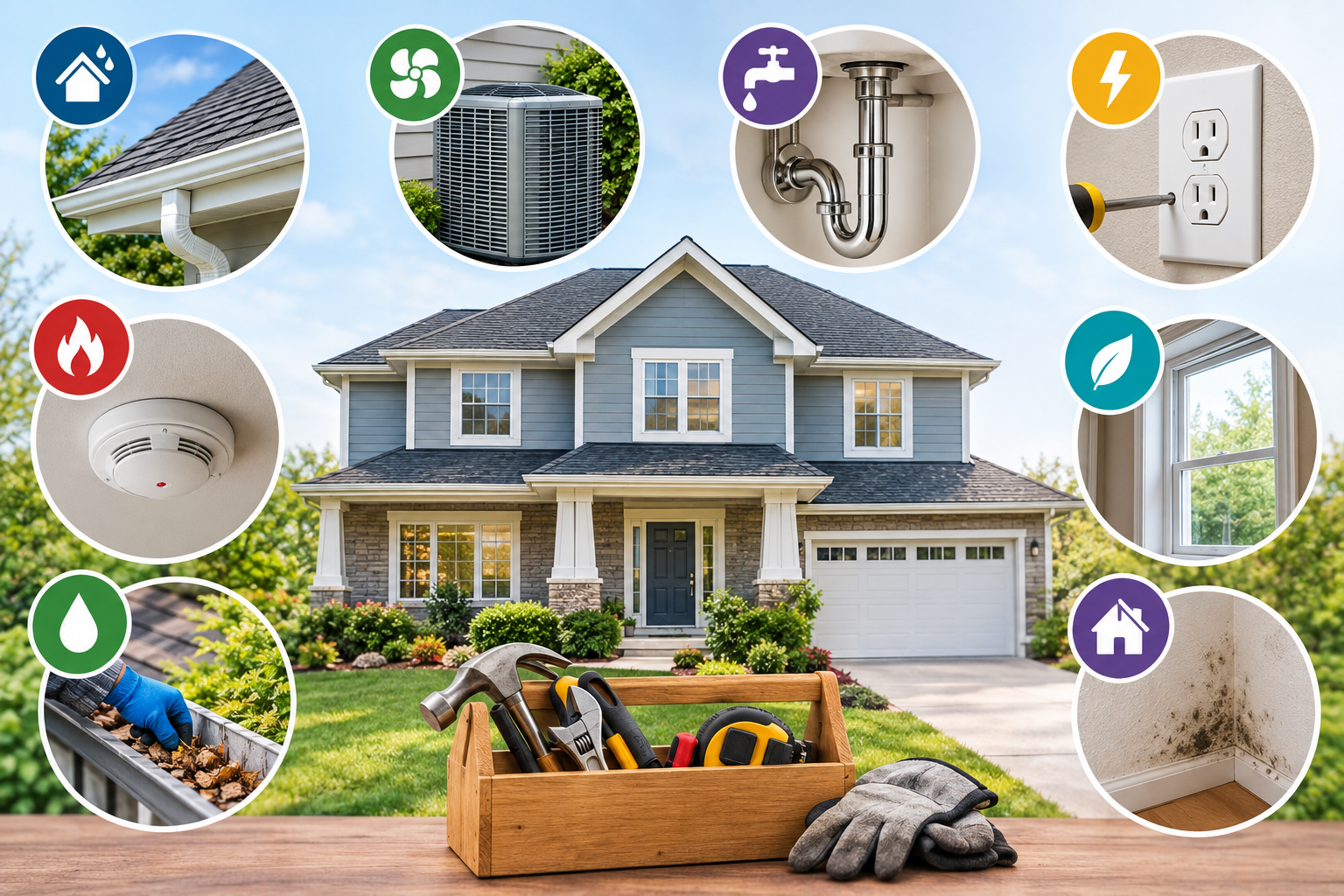
Every homeowner learns the same lesson eventually, usually the expensive way. A problem that would have taken twenty minutes and almost no money to fix six months ago has turned into a repair bill with three figures, sometimes four. This is really why home maintenance is important, because nearly every major home repair started out as a small, ignorable issue, and maintenance is simply the habit of catching those issues while they're still small and cheap. Below is a closer look at exactly what regular upkeep protects, what happens when it gets skipped, and how to actually stay on top of it without it taking over your weekends.
Prevents Costly Repairs
Short answer: Small problems caught early cost a fraction of what the same problem costs after months of neglect, which makes maintenance one of the few home expenses that consistently pays for itself.
A slow leak under a sink is a tightened fitting and a few dollars in parts if you catch it in week one. Left alone for six months, that same leak can mean replacing subfloor, dealing with mold remediation, and repainting a section of wall, easily a jump from a $20 fix to a $2,000 one. This pattern repeats across almost every system in a house: HVAC, roofing, plumbing, and appliances all give warning signs well before they fail completely, and preventive maintenance is really just the practice of paying attention to those signs instead of waiting for total failure.
Protects Home Value
Short answer: A well-maintained home holds its value better than one with deferred maintenance, since buyers and appraisers both read neglected upkeep as a sign of bigger, hidden problems.
Property value isn't just about square footage and location, condition matters enormously too. A home inspector who finds one neglected issue starts looking harder for others, and a buyer who sees peeling exterior paint or a stained ceiling starts mentally subtracting money from their offer, often more than the actual repair would cost, simply because uncertainty makes people cautious. Staying current on home upkeep protects the number that matters most when it's time to sell or refinance.
Improves Safety
Short answer: Regular maintenance catches the electrical, fire, and structural hazards that build up quietly over time, well before they turn into an actual emergency.
This is arguably the most important reason home maintenance matters, even ahead of the financial ones. Smoke and carbon monoxide detectors need functioning batteries. Electrical panels and outlets need to be free of overheating or corrosion. Handrails need to be solid, not just cosmetically fine. None of these are dramatic checks, but skipping them is exactly how small, quiet risks turn into the kind of emergency that makes the news.
Increases Energy Efficiency
Short answer: A well-maintained HVAC system, sealed windows and doors, and clean filters all reduce the energy a home needs to stay comfortable, which shows up directly on the utility bill.
A dirty HVAC filter forces the system to work harder for the same result, and a poorly sealed window or door lets conditioned air leak straight outside. Neither problem looks dramatic day to day, but both quietly inflate energy bills month after month. Energy efficiency is one of the more measurable benefits of staying on top of maintenance, since the savings show up in a number you can actually track on your utility statement.
Extends the Life of Home Systems
Short answer: Routine servicing adds years of usable life to expensive systems like your HVAC, water heater, and roof, delaying the cost of full replacement.
Every major home system has a rough expected lifespan, but that number assumes reasonable upkeep along the way, not neglect. An HVAC system that gets its filters changed and an annual tune-up commonly outlasts one that never gets serviced by several years. A roof with clean gutters and prompt repair of small leaks lasts longer than one left to handle water damage on its own. Maintenance doesn't make anything last forever, but it consistently pushes a replacement date further out, which matters a great deal when that replacement costs thousands of dollars.
Prevents Water and Moisture Damage
Short answer: Checking gutters, caulking, and plumbing regularly stops water from finding its way into places it can quietly cause mold, rot, and structural damage.
Water is patient and it's relentless, and it's behind more expensive home repairs than almost any other cause. Clogged gutters direct water straight down the foundation instead of away from it. Cracked caulking around a tub lets water sneak behind tile and drywall. A slow plumbing leak inside a wall can run for months before it's visible anywhere, by which point mold and rot are already established. Regular checks are what catch these problems while they're still a caulk gun and an afternoon, not a contractor and a demolition.
Improves Comfort
Short answer: A properly maintained home is simply more pleasant to live in day to day, consistent temperatures, working appliances, and no nagging repairs sitting in the back of your mind.
This benefit is easy to overlook because it's not measured in dollars, but it's real. A furnace that's been serviced heats evenly instead of leaving cold spots. A bathroom fan that actually works keeps humidity from lingering after a shower. None of these individually feel significant, but together they're the difference between a home that feels cared for and one that feels like it's slowly falling behind, even if nothing has technically broken yet.
Maintains Curb Appeal
Short answer: Exterior upkeep, paint, landscaping, a clean driveway, keeps a home looking cared for, which matters both for your own daily experience of coming home and for how the property is perceived by anyone who sees it.
Curb appeal isn't purely cosmetic. Peeling paint, an overgrown yard, or a cracked driveway all suggest the same thing to a passerby or a potential buyer: if the outside looks neglected, what does that suggest about what's been skipped inside? Keeping the exterior maintained is one of the more visible, immediate signals that a home has been genuinely taken care of.
Supports Resale Value
Short answer: A documented history of regular maintenance gives buyers real confidence, which translates into stronger offers and fewer renegotiations after inspection.
Beyond the general condition benefit, having records, receipts, service dates, and a general sense of what's been kept up, gives a buyer's inspector far less to flag. A home that sails through inspection with only minor notes sells with less friction than one that turns up a long list of deferred issues, and every item on that list becomes a point of negotiation that usually costs more at that stage than it would have earlier.
Reduces Long-Term Costs
Short answer: The cumulative cost of regular, small maintenance expenses is almost always lower than the cost of reactive repairs and emergency replacements over the same period.
This is really the thread connecting every other benefit on this list. Home maintenance costs money, there's no getting around that, but it costs far less than the alternative. A homeowner who budgets a modest amount every year for upkeep and small repairs consistently spends less over a decade than one who waits for things to fail and handles everything as an emergency, both in raw dollars and in the stress of dealing with a problem that's already gotten worse than it needed to.
Home Maintenance Checklist
Short answer: A short list of monthly, seasonal, and annual tasks covers most of what actually matters, detectors, filters, leaks, gutters, and a yearly check of major systems.
Knowing maintenance matters is one thing, actually keeping track of it is another. A simple recurring maintenance checklist removes the guesswork: test detectors and check HVAC filters monthly, inspect gutters and caulking each season, and have major systems like the roof, water heater, and HVAC professionally checked once a year. We've laid out a full room-by-room version of this in our monthly home maintenance checklist, which is worth working from directly rather than trying to remember everything from scratch.
Monthly, Seasonal & Annual Maintenance
Short answer: Spreading maintenance tasks across monthly, seasonal, and annual checkpoints keeps the workload manageable instead of turning into one overwhelming project a few times a year.
| Frequency | Focus | Example Tasks |
|---|---|---|
| Monthly | Quick checks that catch problems early | Detector tests, HVAC filter, leak checks |
| Seasonal | Weather-driven prep | Gutter clearing, winterizing pipes, AC tune-up |
| Annual | Full-system servicing | Roof inspection, water heater flush, electrical panel check |
Spacing tasks out this way is what actually makes a maintenance routine sustainable long-term. Trying to do everything at once, once a year, tends to mean half of it gets skipped because it's simply too much for one weekend, while a steady monthly and seasonal rhythm keeps each individual task small and easy to actually follow through on.
Frequently Asked Questions
What happens if you don't maintain your house?
Small issues compound into bigger, more expensive ones. A minor roof leak becomes a ceiling replacement, a neglected HVAC filter shortens the system's lifespan, and cosmetic issues left unaddressed can lower both daily comfort and resale value.
How often should a home be maintained?
A mix of frequencies works best, some tasks (like detector testing and HVAC filters) monthly, others (like gutter cleaning and caulking checks) seasonally, and major system inspections annually.
What should first-time homeowners prioritize maintaining?
Smoke and carbon monoxide detectors, HVAC filters, and checking under sinks for leaks are the highest-value, lowest-effort places to start, since they address safety and the most common sources of water damage right away.
How much should homeowners budget for maintenance each year?
A common rule of thumb is 1% to 2% of the home's value annually, though older homes or homes with aging major systems often need to plan toward the higher end of that range.
Does home maintenance really improve energy efficiency?
Yes. Clean HVAC filters, sealed windows and doors, and a properly serviced heating and cooling system all reduce the energy needed to keep a home comfortable, which shows up directly in lower utility bills.
Conclusion
Understanding why home maintenance is important really comes down to one idea: it's consistently cheaper, safer, and less stressful than the alternative of waiting for things to break. Every benefit here, lower repair costs, stronger resale value, better safety, lower energy bills, ties back to the same simple idea: small, regular attention beats large, reactive fixes almost every time. You don't need to overhaul your entire routine overnight, starting with even a handful of monthly checks puts you well ahead of where most homes end up.