

Introduction
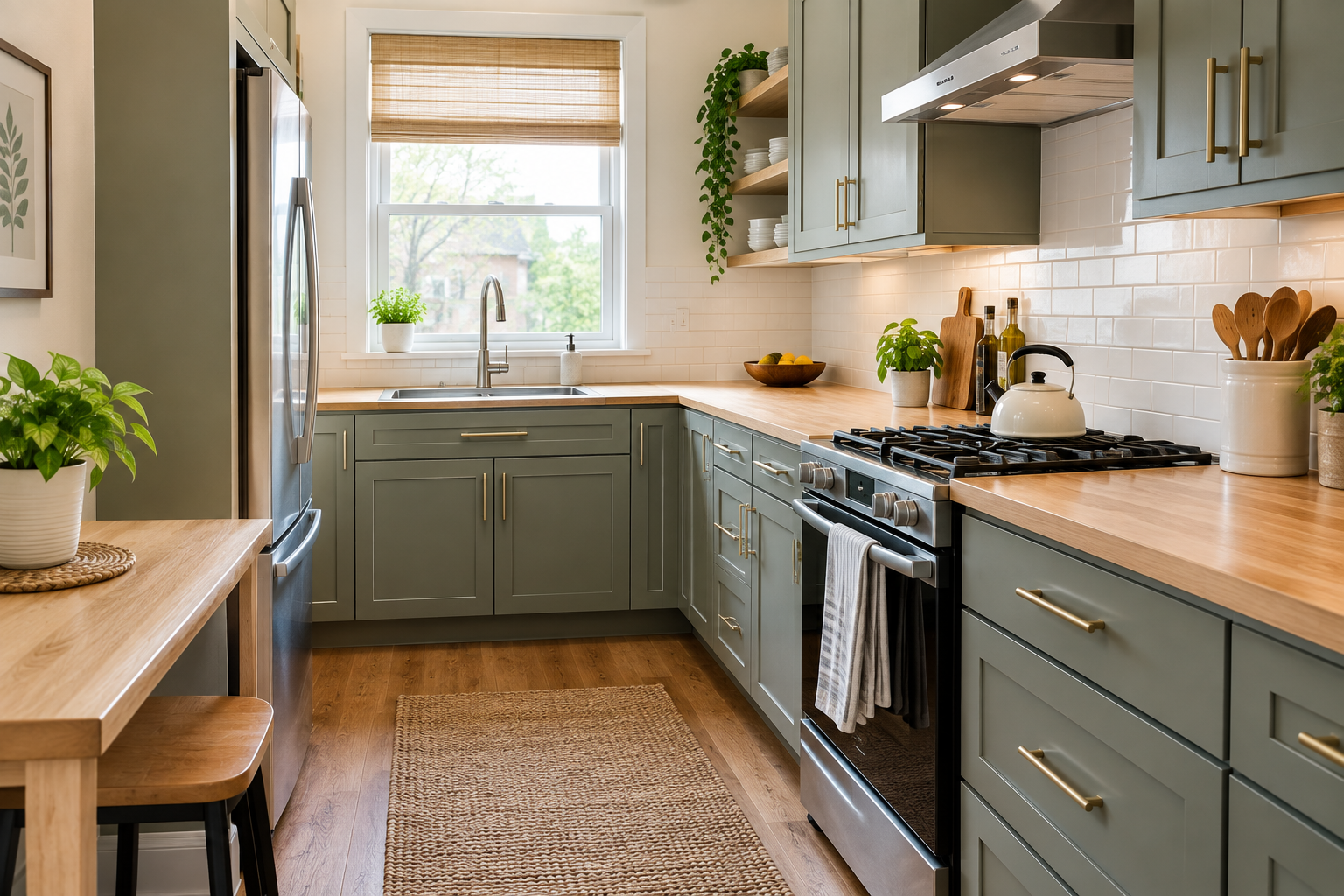
A small kitchen doesn't need more square footage to function well, it needs a system. Most of the frustration people feel in a tight kitchen isn't really about size at all, it's about not having a clear home for every single item, which means the same handful of things end up shoved wherever there's space that day. The small kitchen organization ideas below work through the kitchen the way you'd actually use it, cabinets, drawers, counters, and everything in between, so each item ends up somewhere you'll actually remember to put it back.
| Problem Area | What Actually Fixes It |
|---|---|
| Overflowing cabinets | A real purge, plus grouping by how often items are used |
| Junk drawer chaos | Dividers sized to what's actually in the drawer |
| No pantry | Vertical shelving, door racks, or a slim rolling cart |
| Cluttered counters | Relocating small appliances to a dedicated zone |
| Spice mess | A flat or tiered rack instead of a deep cabinet shelf |
| Wasted wall space | Rails, hooks, and a magnetic strip near the stove |
Start With a Full Purge Before You Organize Anything
Short answer: Take everything out of every cabinet and drawer first, since it's nearly impossible to design good storage around items you can't actually see all at once.
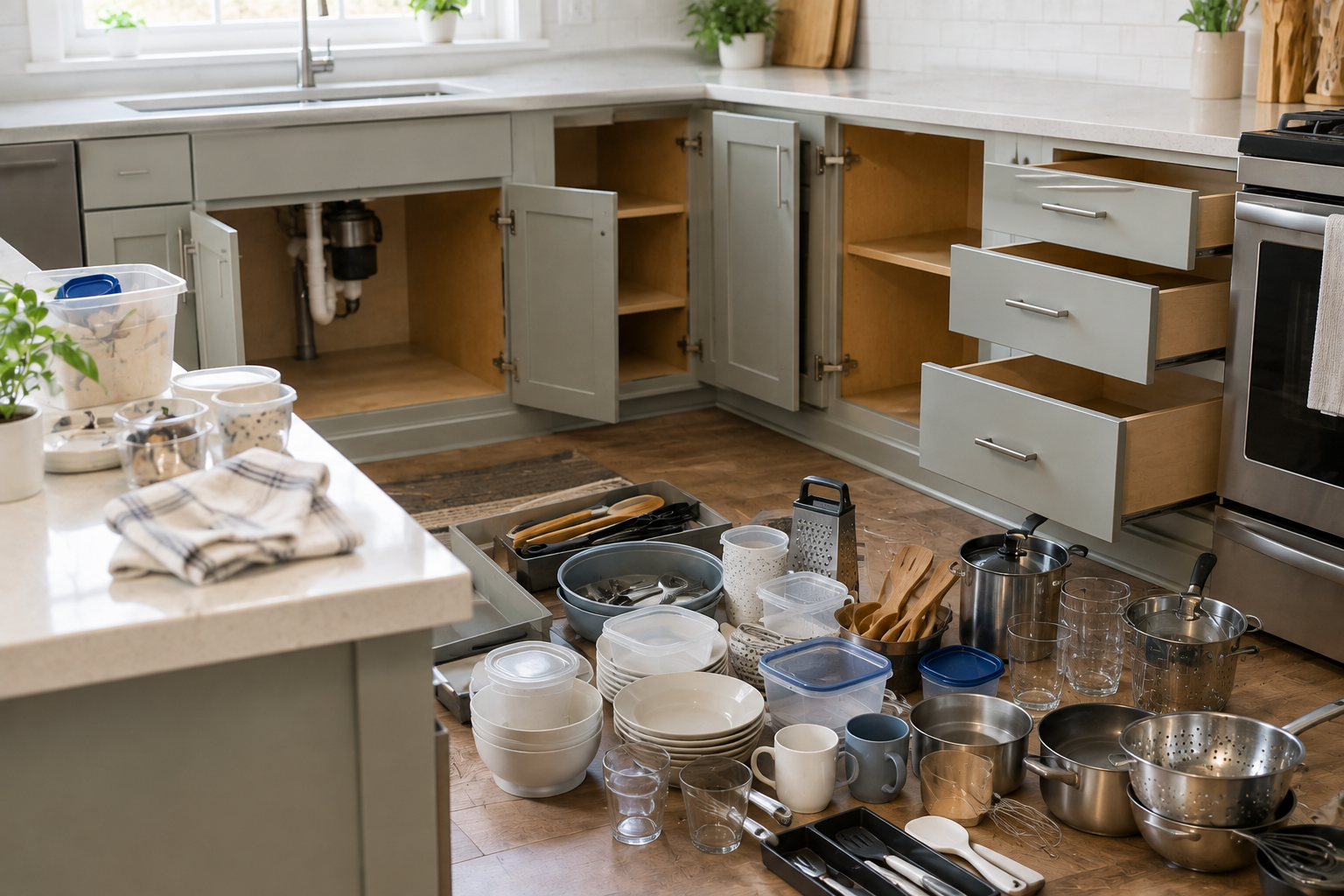
This step gets skipped constantly, but it's the one that makes every other tip on this page actually work. Pull everything out onto the counters and the table, and sort it into three piles: things you use regularly, things you use occasionally (holiday dishes, a fondue pot), and things that haven't been touched in over a year. That last pile almost always turns out bigger than people expect, and it's what frees up the real estate the rest of your small kitchen desperately needs. Duplicate gadgets are usually the easiest cuts, you rarely need three spatulas or two garlic presses in a kitchen this size.
Think in Zones Instead of Just Finding Empty Spots
Short answer: Group items by the task they're used for, prep, cooking, baking, and cleanup, then store each group near where that task actually happens.
Random open space is tempting to fill with whatever doesn't have a home yet, but that's how a small kitchen ends up disorganized again within a month. Instead, think about the actual sequence of cooking: cutting boards and knives near the prep counter, pots and pans near the stove, mixing bowls and measuring cups near where you bake, and cleaning supplies near the sink. This kind of zoning is one of the more reliable small kitchen organization ideas out there, since it turns putting things away into something automatic instead of a decision you have to make every single time.
Organize Cabinets by How Often You Actually Use What's Inside
Short answer: Keep daily items at eye level and arm's reach, and push anything used less than once a month to the highest or lowest shelves.
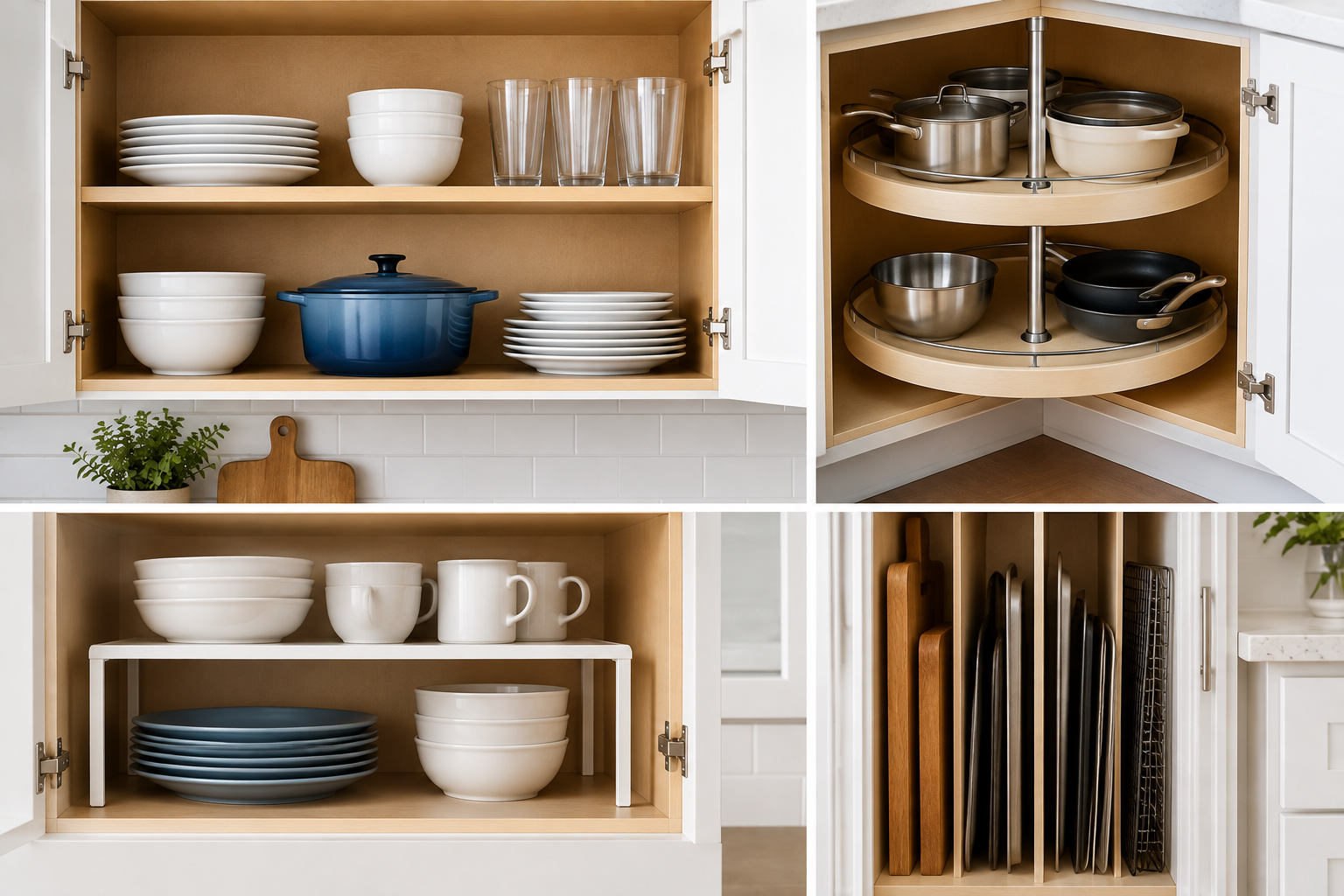
The cabinets closest to standing height are the most valuable real estate in the entire kitchen, so don't waste them on things you touch twice a year. Everyday plates, glasses, and cookware belong front and center. A lazy Susan solves the classic problem of corner cabinets swallowing items whole, and a shelf riser adds a second usable layer to any cabinet that has dead vertical space above what's already stored there. If you've got tall, narrow cabinets, vertical dividers turn wasted depth into slots for cutting boards, sheet pans, and trays that would otherwise slide around and get buried.
Set Up Drawers With Dividers Sized to What's Actually in Them
Short answer: Measure your utensils and gadgets before buying dividers, since generic organizers almost never fit a small kitchen's drawers as well as ones matched to what you actually own.
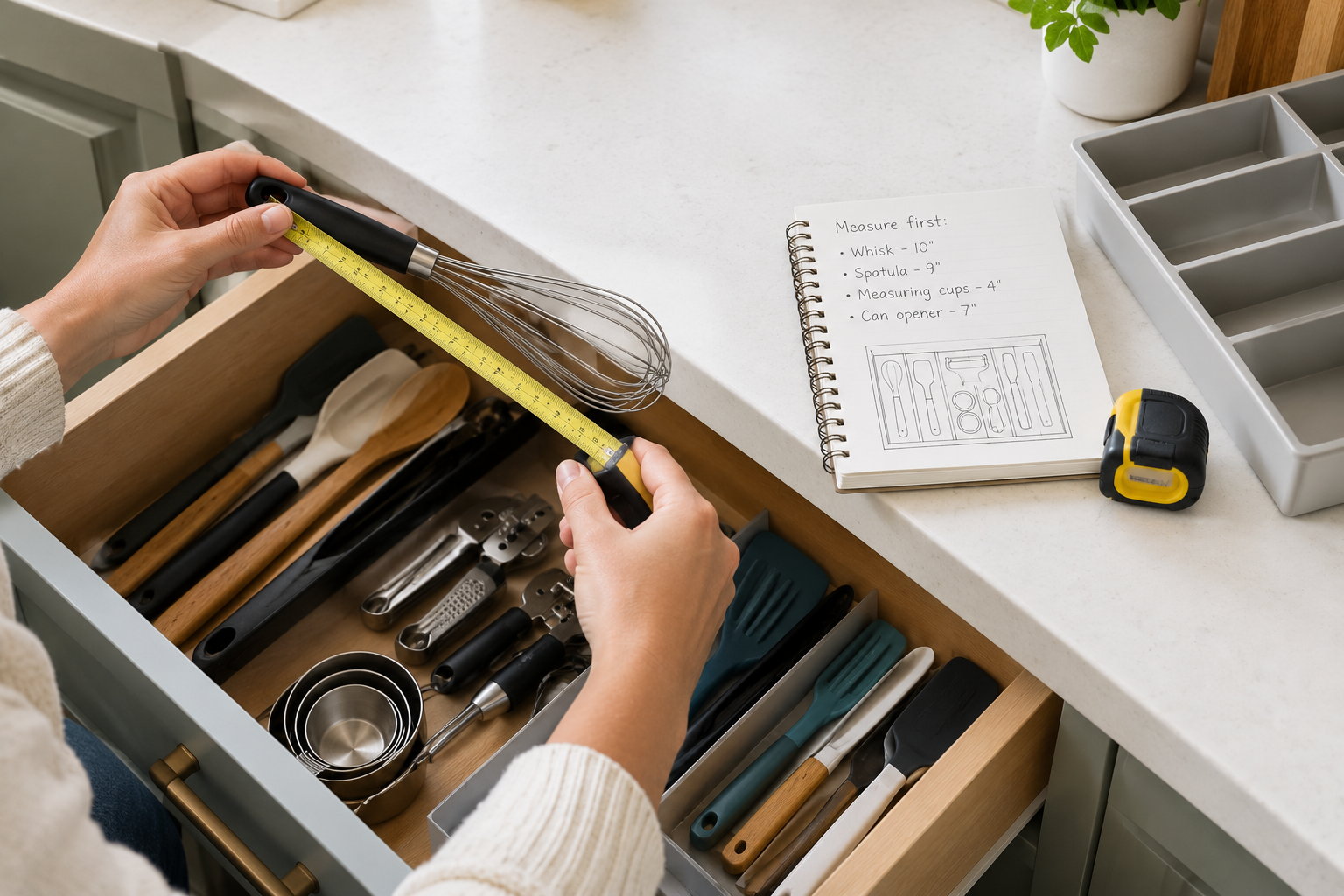
A drawer without dividers turns into a pile within days, no matter how organized it starts out. Expandable divider trays adjust to fit odd drawer widths, which matters more in a small kitchen where drawers are rarely a standard size. Keep one drawer for daily tools (can opener, peeler, measuring spoons) as close to the prep zone as possible, and use a second, deeper drawer for less frequently used gadgets. If you only have one or two drawers total, prioritize utensils and skip dedicating a whole drawer to anything you could store just as easily on a hook or in a cabinet bin instead.
Make the Most of Vertical Wall Space
Short answer: Rails, hooks, and a magnetic strip near the stove turn empty wall space into functional storage without touching your cabinet capacity at all.
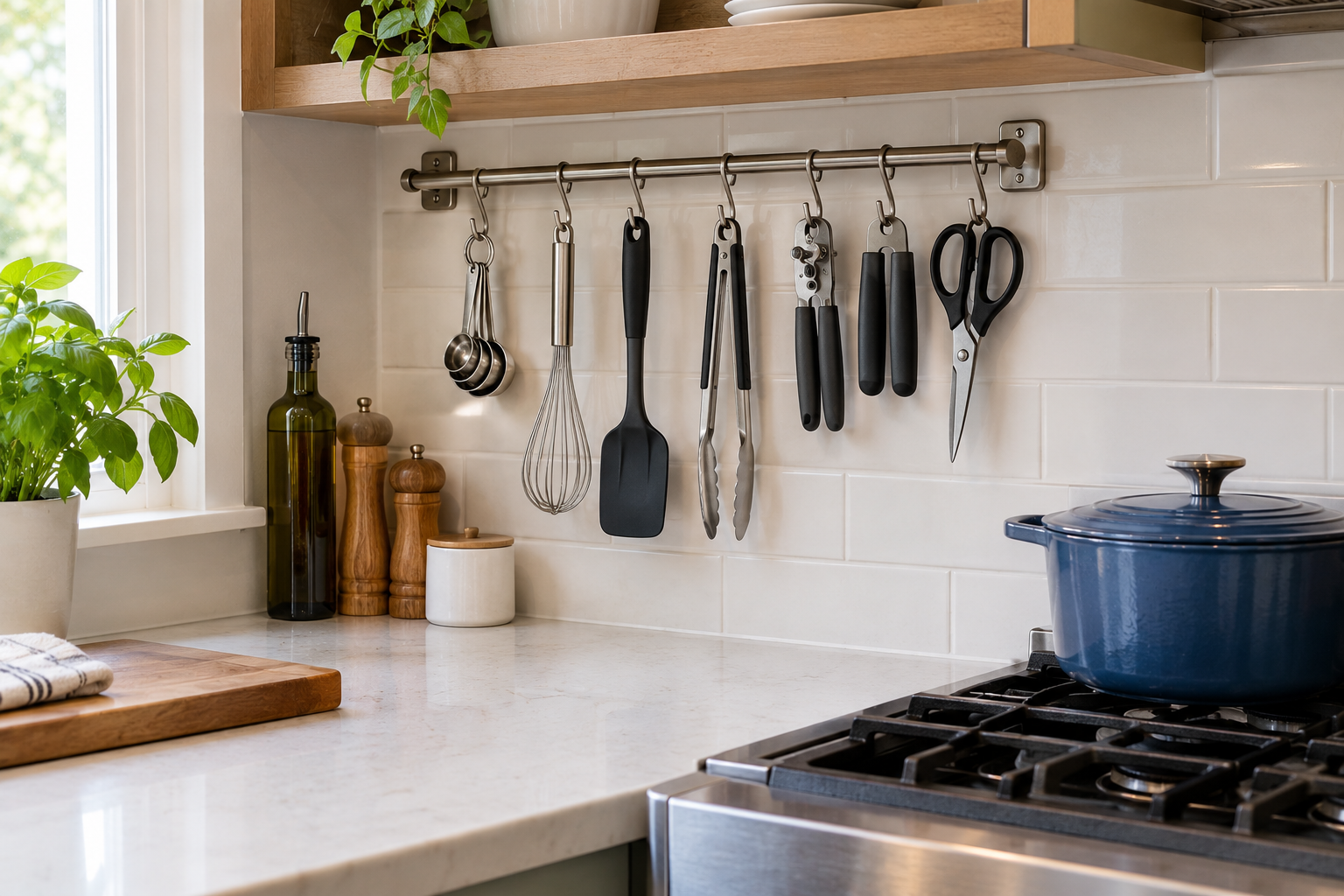
Walls are the most underused storage surface in almost every small kitchen, mostly because it's easy to forget they're an option at all, and this is one of the small kitchen organization ideas that costs almost nothing to try. A rail with S-hooks near the stove holds your most-used pots, spoons, and towels within arm's reach (we actually walked through building one of these in an afternoon over in our weekend DIY projects guide). A magnetic knife strip clears an entire drawer's worth of space and keeps blades more accessible than a bulky countertop block ever would. If your cabinets don't reach the ceiling, that gap above them is prime storage for baskets holding things you need but don't reach for often, like extra linens or specialty bakeware.
Organize Spices So You Can Actually Find What You Need
Short answer: A shallow tiered rack or a magnetic strip lets you see every spice label at once, instead of digging through a deep cabinet shelf where half the jars hide behind the front row.
Spices are one of the most common trouble spots in a small kitchen, and it's rarely about having too many, it's about storing them somewhere you can't actually see them. A door-mounted rack on the inside of a cabinet door uses space that would otherwise sit empty. If wall space allows, a magnetic spice rack near the stove keeps the jars you reach for most within a single glance. Whatever system you choose, standardizing the containers (even just decanting into matching small jars) makes a bigger visual and functional difference than people expect, since your eye can scan a uniform row far faster than a mismatched jumble of packaging.
Store Pots, Pans, and Lids Without the Daily Avalanche
Short answer: A vertical divider or a hanging rail keeps pots and pans upright instead of stacked, which is what actually prevents the pull-one-out-and-everything-falls problem.
Stacked cookware is one of the most common complaints in a small kitchen, mostly because pulling the bottom pan out means unstacking everything on top of it first. A cabinet-mounted vertical organizer keeps pans standing on their sides like files, so you can slide any one out without disturbing the rest. Lids are their own separate headache, a simple lid rack or a deep, narrow bin keeps them corralled instead of clattering around loose in the back of a cabinet. If wall space allows, hanging your most-used pots on a rail near the stove removes them from cabinet storage entirely.
Solve the "No Pantry" Problem With a Few Substitutes
Short answer: Open shelving, the inside of cabinet doors, and a slim rolling cart can all stand in for a dedicated pantry when your kitchen simply doesn't have one.
A missing pantry is one of the most common searches for small kitchens, and thankfully it's a solvable problem. Open shelving on an empty wall works well for canned goods and dry ingredients you use often, since seeing them actually helps you remember what you have. A narrow rolling cart tucked into a gap between the fridge and a wall adds real storage that can roll out when you need it and disappear when you don't. If there's a hall closet or even a corner of the dining room nearby, a simple shelf unit there can absorb overflow pantry items without crowding the kitchen itself.
Keep Small Appliances From Taking Over Your Counters
Short answer: Store appliances you use daily on the counter, and move anything used weekly or less into a cabinet, a shelf, or a rolling cart out of the main workspace.
Countertop clutter builds up fast when every appliance defaults to "just leave it out," and this is one of the small kitchen organization ideas that pays off almost immediately once you actually commit to it. Be honest about actual frequency: a coffee maker used every morning earns counter space, but a waffle iron used twice a year doesn't. For appliances used a few times a week, a wire shelving unit or a dedicated cabinet shelf keeps them accessible without permanently occupying your prep space. If two appliances share a similar footprint, like a blender and a food processor, storing them in the same spot means you're only sacrificing one storage zone instead of two.
Clear Off Your Countertops for Good
Short answer: Every item on the counter should either be used daily or be something you're comfortable seeing every time you cook, everything else needs a real home somewhere else.
Countertop space is often the single most valuable surface in a small kitchen, since it's both your workspace and the first thing anyone sees when they walk in. A cutting board propped against the backsplash instead of laid flat frees up real prep room. A tray or a small basket can corral the few items that do need to stay out (oils, a utensil crock) so they read as an intentional grouping rather than scattered clutter. If mail, keys, or random household items tend to migrate onto your kitchen counter, a small designated bin or hook near the entry point stops that habit before it starts.
Organize Under the Kitchen Sink
Short answer: A tiered caddy or stackable bins turn the awkward space around plumbing pipes into usable storage instead of a junk pile.
The area under the sink is oddly shaped because of the pipes running through it, which is exactly why it tends to become a dumping ground. A two-tier under-sink organizer works around the plumbing while doubling your usable shelf space. Group cleaning supplies, trash bags, and dish soap refills into separate bins so you're not digging through a single mixed pile every time you need one specific thing. A tension rod mounted low across the cabinet is also a simple way to hang spray bottles by their necks, freeing up the floor of the cabinet entirely.
Make a Small Kitchen Look Bigger, Not Just More Organized
Short answer: Light, consistent colors, clear or matching containers, and a few open shelves make a kitchen feel more spacious even when the actual square footage hasn't changed.
Organization and the sense of space are related but not identical, a kitchen can be fully organized and still feel cramped if everything is visually busy. Swapping mismatched food packaging for clear or matching containers removes a surprising amount of visual noise. A lighter, consistent color palette on cabinets and walls reflects more light than a dark or patterned one, and if you're weighing whether a lighter palette is worth pairing with new cabinets entirely, that's a bigger decision we cover in our guide to what a kitchen remodel actually changes. One or two open shelves, rather than a wall of closed cabinets, can also make the room feel less boxed in, as long as what's displayed stays reasonably tidy.
Choose Organizers That Actually Earn Their Spot
Short answer: Measure the space first and buy the organizer to fit it, rather than buying a popular organizer and hoping your cabinet or drawer works around it.
Not every trending organizer is worth buying for every kitchen, and in a small space, a product that doesn't fit exactly right can waste more room than it saves. This is honestly where a lot of small kitchen organization ideas fall apart in practice, since people tend to buy the popular option instead of the one sized for their actual cabinet. Expandable drawer dividers, tiered shelf risers, and door-mounted racks are consistently useful because they adapt to odd dimensions rather than requiring a specific size cabinet. Before buying anything, measure the actual space (width, depth, and height) so you're not returning a product that looked perfect online but doesn't fit the one cabinet you needed it for. If you're on a tight budget, tension rods, command hooks, and repurposed jars solve a surprising number of these same problems for a fraction of the cost.
Keep It Organized Long-Term With a Few Simple Habits
Short answer: A five-minute reset at the end of each day and a seasonal mini-purge are what actually keep a small kitchen organized, not a one-time overhaul.
The initial organizing session is the easy part, keeping it that way is where most systems break down. A quick end-of-day reset, putting stray items back in their designated spot, takes only a few minutes but prevents the slow slide back into clutter. Every few months, a short re-purge catches the new duplicate gadgets and forgotten pantry items that quietly accumulate even in a well-organized space. If a system genuinely isn't working (a drawer that never stays tidy, a shelf that's always a mess), that's usually a sign the zone needs to change, not that you need to try harder to maintain it.
Frequently Asked Questions
How do I organize a very small kitchen with almost no cabinets?
Lean heavily on vertical wall space: rails, hooks, and open shelving can replace a surprising amount of missing cabinet storage. A rolling cart also adds flexible storage that can move wherever it's needed most.
How can I organize my kitchen if I don't have a pantry?
Open shelving, the inside of cabinet doors, and a slim rolling cart between appliances all work as pantry substitutes. A nearby closet or hallway shelf can also absorb overflow if the kitchen itself has no room left.
What kitchen organizers are actually worth buying?
Expandable drawer dividers, tiered shelf risers, and door-mounted racks tend to be worth it because they adapt to odd or non-standard spaces. Measure your cabinets and drawers before buying anything so you know it will actually fit.
How can I make a small kitchen look bigger without renovating?
Light, consistent colors, clear or matching storage containers, and one or two open shelves instead of a full wall of cabinets all help a kitchen read as more spacious, even without changing its actual size.
How often should I re-organize a small kitchen to keep it that way?
A quick daily reset handles day-to-day clutter, and a short seasonal purge every few months catches the new items that quietly build up. Full reorganizing from scratch usually isn't necessary if those two habits stick.
Conclusion
Organizing a small kitchen isn't really about fitting more into less space, it's about giving everything you already own a specific, logical home. Start with the purge, work through cabinets, drawers, and walls one zone at a time, and don't be afraid to rethink a system that isn't holding up. Most of the small kitchen organization ideas here cost very little, which is part of the point. You don't need a renovation to make the room feel calm and functional again, just a system that matches how you actually cook.
If the reorganizing turns up bigger issues, like cabinets that are falling apart or a layout that fights you no matter how well it's organized, it may be worth looking past storage fixes toward a fuller refresh of the room.